
There are many types of support groups, but quite none like this. The Bite Club is a network and safe space created for people who have survived shark attacks.
Founded by David Pearson, a shark attack survivor, the club has grown from an informal group of survivors to an international community where people connect over their shared trauma, aid each other in healing, and learn to rebuild their lives.
Although it was originally focused on shark attacks, it has now expanded to become a hub for people who were victims of all sorts of life-threatening animal attacks.
Pearson's journey began in 2011 after he was attacked by a three-meter bull shark while surfing in Crowdy Head, Australia.
The shark's bite nearly severed his arm, and the physical recovery was only part of the ordeal.
The psychological effects that followed - feelings of isolation, recurring flashbacks, and post-traumatic stress disorder (PTSD) - were just as hard to cope with.
Pearson found that people who hadn't experienced such an attack couldn't fully understand the depth of his trauma, even if they wanted to.
As he put it, talking to others helped in ways that sympathy alone could not: "It was like they didn't really understand what my head was going through."

An Online Forum for Sharing and Caring
This realization inspired him to seek out other survivors, creating what would eventually become Bite Club.
Bite Club started as a small online forum where shark attack survivors could talk freely about the fears and thoughts they faced.
Over time, the group expanded to include survivors of various animal attacks, such as lion maulings, crocodile rolls, and even incidents with hippos and bears.
Today, the club has over 500 members worldwide.
Although every attack is unique, all members share the lasting impact of trauma, and the group offers a place to feel understood and free from judgment.
Pearson has noted that "every attack brings your attack back" - a sentiment that resonates deeply within the group, as each new attack in the world can trigger old memories for members.
The Bite Club community extends beyond survivors, welcoming their families, rescuers, and friends who are also affected by the trauma.
And that makes all the difference.
For many, like Kevin Young, whose son was killed in a shark attack, the club provides essential support.
Young's son, Zac, died after a tiger shark attacked him while surfing, and Young describes feeling "inside the eye of a storm" ever since.
The experience also took a toll on Zac's friends, who were with him and tried to bring him to safety.
Bite Club has given them a space to process their grief and find similar stories and camaraderie with others who understand their pain.
Recovery Takes Time
The healing journey in Bite Club is way more than finding emotional support.
Actually, the most important part is taking active steps toward recovery, both physical and mental.
The club hosts gatherings, such as the surf meet-up at Manly Beach in 2023, where several members paddled out and rode waves together - some for the first time since their attacks.
Pearson notes that these gatherings allow members to reclaim parts of their old lives and confront lingering fears.
"Surfing has changed for me, and in fact, it's probably more special now," Pearson says, reflecting on how facing the ocean after a shark attack has become both a symbolic and literal act of reclaiming his life.
Bite Club also provides practical assistance, such as access to counseling and financial support.
Many members face financial strain due to ongoing medical costs, so Pearson recently launched a GoFundMe campaign to help cover expenses for members attending the annual gathering.
Beyond offering therapy and funds, Bite Club connects survivors with a psychologist who works pro bono to guide them through their stages of recovery.
As Pearson explains, "There are five stages of healing, and the last is helping others."
Many survivors have found meaning in assisting new members, knowing that in giving support, they are also finding their own path to healing.

Dark Humor
The club has a distinct culture shaped by its founder's sense of humor and understanding of survivor resilience.
Members often embrace dark humor as a coping mechanism, like when they wore "Shark Bait" t-shirts to their surfing event.
So, in a way, they feel like while they may have lost a sense of physical safety, they have gained a community that understands what they've gone through intimately.
Pearson's founding ethos is one of mutual respect and support: the club emphasizes open, respectful dialogue, even as members bring diverse views, from pro-conservation to anti-shark stances.
Despite the bond that Bite Club creates, it's a bittersweet organization.
Pearson often says that Bite Club "doesn't want new members" because joining usually means enduring a harrowing attack.
Still, Pearson remains ready to help when the next survivor comes along, reaching out personally to assure them, "This is going to be tough."
He stays connected with his members, spends nights on the phone with those needing extra support, and remains in touch with survivors from all around the world.
Ultimately, surviving a violent animal attack is just the beginning of a long process.
"We're a family, and we help each other heal," Pearson says, describing how the club's supportive environment has created something bigger than he ever anticipated.
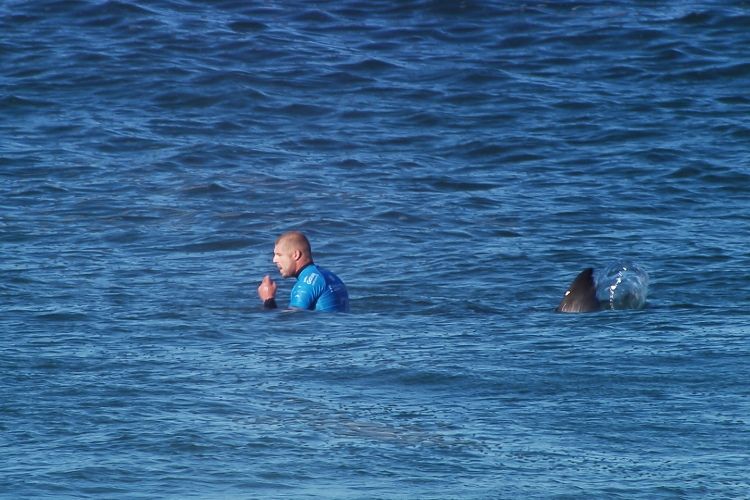
Surfers and Sharks
Although the odds of being attacked by a shark are relatively low, surfers are always a risk group, especially for the time spent in the ocean.
One of the most well-known cases, widely reported by mainstream media, was when Mick Fanning was bitten by a shark during the 2015 J-Bay Open final in South Africa.
Weeks after the unprecedented incident, the three-time world surfing champion got back to the water to overcome his demons.
If you've been attacked by a shark or any other animal, reach out to the Bite Club on Facebook.
Words by Luís MP | Founder of SurferToday.com
por Surf News | Headlines and Top Stories https://ift.tt/jsz54le