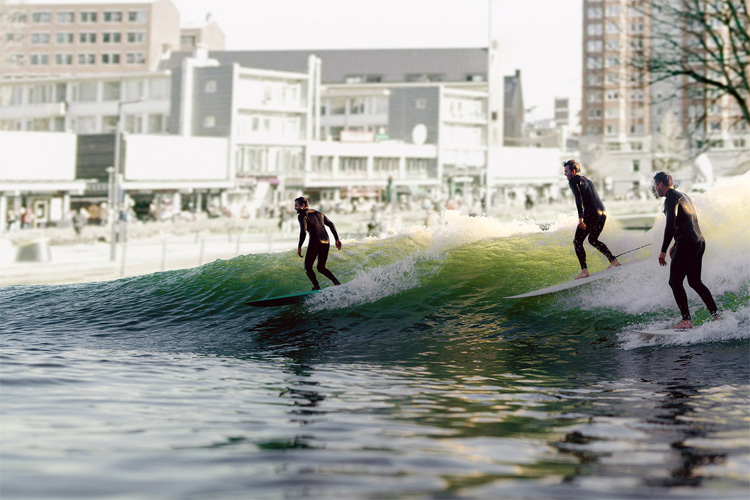
The world's first city center wave pool is ready to welcome surfers. Meet RiF010, the Dutch answer to urban surfing.
Rotterdam is home to Europe's largest seaport. It is known for its architecture, arts scene, and maritime heritage.
Despite being just 30 kilometers away from Scheveningen, probably the best surf break in the Netherlands, "Roffa," one of the city's nicknames, felt the need to optimize part of one of its several canals.
The Dutch are world-famous for their land reclamation tradition, a vital part of their history and development.
With much of the country situated below sea level, approximately 17 percent of the current land area has been reclaimed from the sea or lakes for centuries to expand their territory and create valuable agricultural land and urban areas.
The Rotterdam surfing community is now doing the same - creating waves where there was only water.
Ten Years in the Making
But turning the dream into reality was a very complex process. It took ten years for RiF010 to see the light at the end of the barrel.
Edward van Dongen and Edwin van Viegen are the two "lunatics" who dared to imagine a moving wave rolling in the Steigersgracht, one of River Rotte's canals.
Around 2014, they thought of a better way to have consistent surf in Rotterdam that could be less dependent on the North Sea's sensitive weather and swell conditions.
One of the first steps was to contact the local authorities. The town hall liked it, but some of the residents did not.
They feared a surf break in front of their homes would bring noise and confusion to the quiet neighborhood.
Despite having won €3 million in public funding from a citizen initiative program, Edward and Edwin faced legal action to put an end to their dream.
Five years later, the Dutch court gave them the green light to kick off RiF010. But then again, the pandemic hit, and the project had to be suspended.
In the meantime, the construction costs went up, and the final estimate to make surfing a reality in the heart of Rotterdam was €10 million.
At some point, the entrepreneur thought about hanging the leash and canceling the project.
Luckily, with the support of a group of local entrepreneurs and additional financing from the Dutch bank ABN Amro, RiF010's artificial wave kept rolling.
One Wave Every 7 Seconds
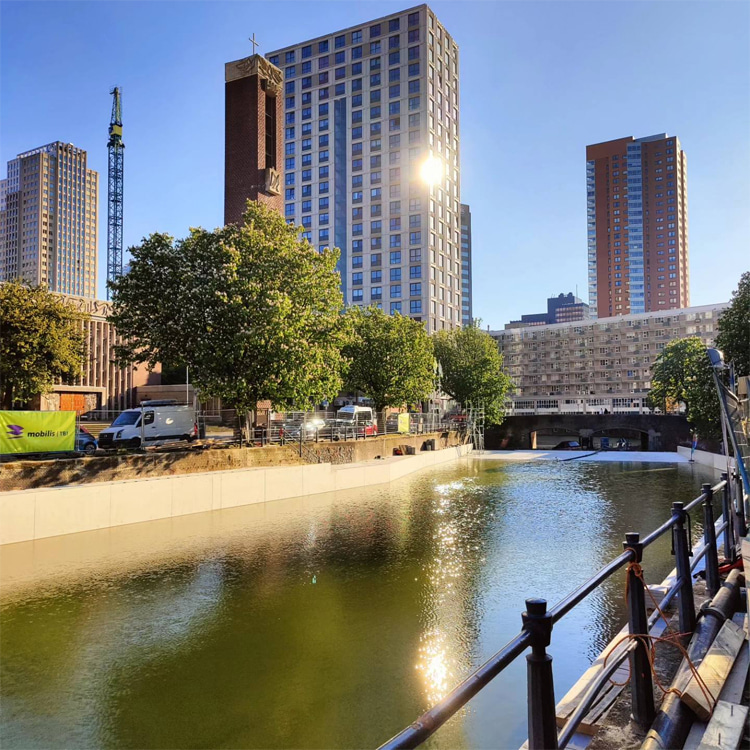
Rotterdam's outdoor urban wave pool is filled with water and ready to inspire a new generation of city surfers.
You will find it at Zijl, 3011 PX Rotterdam. It's a one-minute walk from the Markthal and five minutes away from the Maritime Museum.
The wave-riding lane is around 50 meters long.
RiF010 uses a pneumatic system by Surf Loch, developed in association with Delft University of Technology, that creates a wave every seven seconds.
After fine-tuning the system, developers believe they can generate 1.5-meter high waves peeling across the basin.
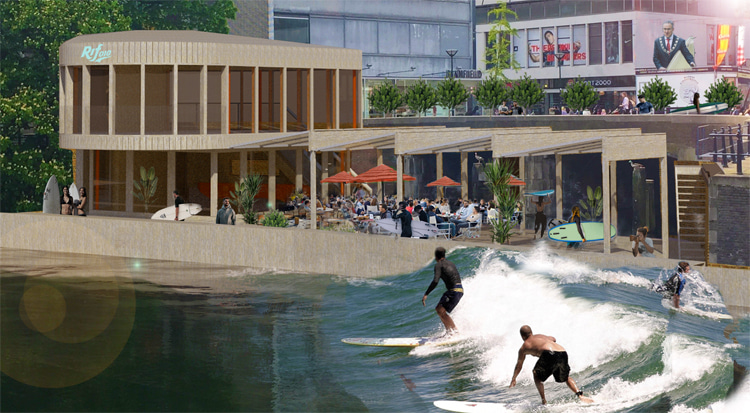
The venue will also feature a wooden beach house with a cafeteria and restaurant designed by Erik de Jong of Morfis Architecture and a surf shop.
The pool will be open for canoeing and diving courses on special days and surfing lessons.
Edward van Dongen and Edwin van Viegen believe RiF010 can hold around 150,000 surfers annually, but at 20 percent capacity, it becomes a viable business.
Open All Year Round
RiF010 opens on July 6, 2024, with the Rotterdam Surf Open.
A one-hour session at the Rotterdam wave pool costs €35 to €60, depending on the wave height.
It is open ten hours a day, all year round. During winter, underwater lighting keeps the surf up in the late afternoon.
Why is Rotterdam's wave pool named RiF010?
The brand derives from the Dutch word for "reef" and the local postal code "010."
Words by Luís MP | Founder of SurferToday.com
por Surf News | Headlines and Top Stories https://ift.tt/AbzK7ak