Activists from the anonymous Brandalism collective have replaced more than 200 commercial adverts across London, Manchester, and Bristol with satirical artworks protesting Shell's efforts to "fast track the apocalypse" ahead of the oil major's annual general meeting (AGM) in London.
Brandalism's clandestine installation of satirical posters on billboards, bus stops, and tube carriages aims at Shell's marketing strategies to maintain its reputation during its expanding fossil fuel production and recent u-turns on green pledges.
Several poster artworks, designed by nine artists, critique Shell's sponsorship of athletes and sports and its targeting of youth culture, which the group says are PR tactics reminiscent of the tobacco industry.
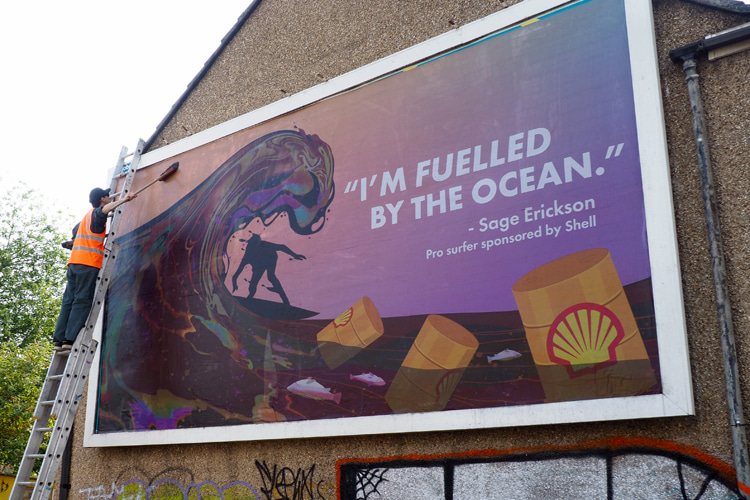
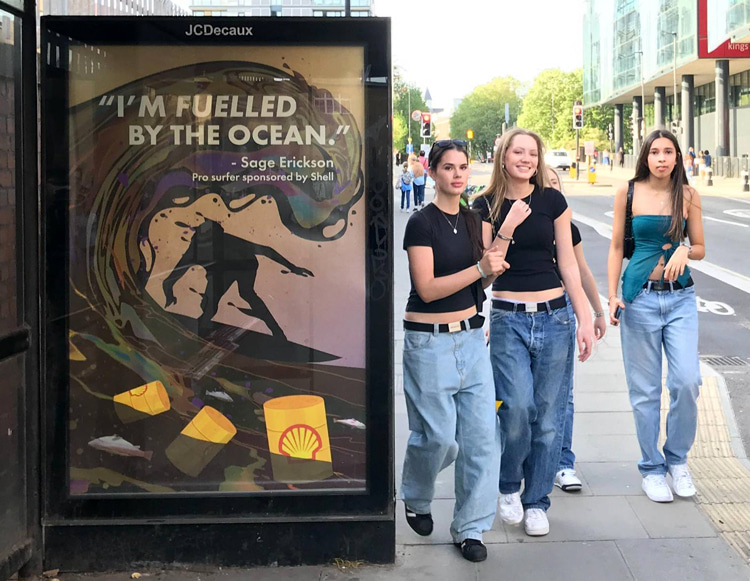
One by artist and surfer Michelle Tylicki shows American pro surfer Sage Erickson surfing over dead fish and oil drums in a multicolored oil slick, and the words "I'm Fuelled by the Ocean."
It's a direct quote from Erickson's "Unbound Diaries" Instagram posts branded with the Shell logo.
"As someone who finds solace in riding waves, to me this quote by pro surfer Sage Erickson, which featured in Shell-sponsored Instagram posts, felt deeply insulting," says Michelle Tylicki, the artist behind the "I'm Fuelled by the Ocean" billboard artwork.
"Shell continues to hack youth culture by tapping up influencers and is benefiting from associating with the world of surfing - its clean ocean imagery and the promise of adventure."
"In fact, Shell has become the most prominent employer of influencer advertising over the last seven years."
"But all the while, Shell is heavily polluting the oceans with oil spills and millions of tons of petroleum hydrocarbon-based plastic."
"Shell has no place in surfing or using athletes to push their harmful products on younger audiences."
"My sickly multicolored oil slick wave demonstrates where the oceans are heading if we keep letting Shell get away with this."
"How Do You Sell Death?"
The artists and activists involved in Brandalism are calling for athletes, sports organizations, shareholders, municipalities, and advertising agencies to reject money from Shell and other fossil fuel companies to clear the way for climate action.
"To quote the tobacco marketers of the 1980s, 'The problem is how do you sell death?'" adds Tona Merriman from Brandalism.
"Shell is on a mission to sell its own lethal legacy, using influencers, greenwash advertising, sports sponsorship, and political connections to deflect attention from its growing contribution to climate breakdown, which is reversing decades of progress in health and causing death and destruction worldwide."
"Shell's insidious tactics are straight out of Big Tobacco's playbook, enabled by a toxic coterie of advertising and PR agencies who should be helping to kick fossil fuel companies into history, not boosting their brand."
A recent analysis by Global Witness suggests that emissions from fossil fuels produced by Shell and four other top oil and gas firms could result in 11.5 million excess deaths from heat by 2100.
Shell alone is responsible for around 1.2 percent of all global emissions between 2016 and 2022, with the firm's contribution to climate change dating back to 1897.
Shell CEO Wael Sawan has rowed back on green pledges amid rocketing profits, saying he wants to "reward our shareholders."
In early May 2024, Shell reported first-quarter profits of $8 bn (£6.15 bn).
Commenting on the Brandalism action, Freddie Daley from the Badvertising campaign, who is calling for a tobacco-style ban on fossil fuel advertising, said: "In recent years, Shell has shown that it has no intention of building a low-carbon energy system and a habitable future."
"By using sports sponsorship, lobbying, and social media influencers, Shell is desperate to maintain its reputation as the firm cash in on climate chaos."
"The only way to break this cycle of misinformation and underhand tactics is to bring in tobacco-style restrictions on fossil fuel advertising."
In 2023, the UK ad watchdog banned a series of Shell ads for greenwashing.
The ads overemphasized Shell's investment in renewable energy and failed to mention its large-scale and expanding fossil fuel activities.
Shell's latest climate strategy, which has been denounced as weak, will be voted on by shareholders at its London AGM on May 21, 2024.
por Surf News | Headlines and Top Stories https://ift.tt/egLNnEO