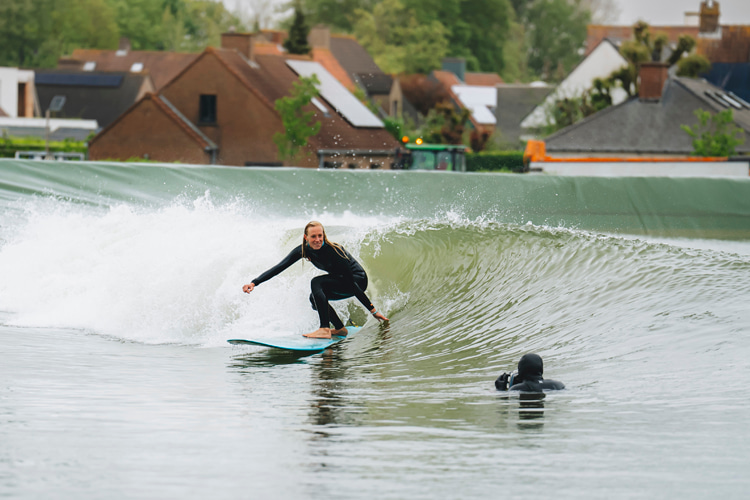
AllWaves is a new wave pool technology from Belgium that allows surfing on an artificial lake, thus bringing surfing experiences closer to enthusiasts and landlocked surfers.
The number of artificial wave generation systems is growing fast, anchored on multiple unique selling propositions: wave height, wave frequency, pool capacity, energy consumption, investment, installation time, etc.
AllWaves is a product of Belgium, a country often known for its high-end chocolate, beer, waffles, and fries.
Its natural appearance and design allow infinite wave variations, and it's the brainchild of wave energy expert and surfer Steven Nauwelaerts
In 2020, after a decade of experience in offshore energy production combined with years of exploring surf breaks from Spain to Sri Lanka, Steven partnered with his cousin and serial entrepreneur Geert Nauwelaerts to create something new.
Their goal was simple: to create the world's safest wave pool, with a natural look and feel that increases access to the sport in a predictable and controlled environment.
The system mimics the movement of ocean waves and can be adjusted to create big or small, hollow or crumbling waves, depending on the surfer's skill level.
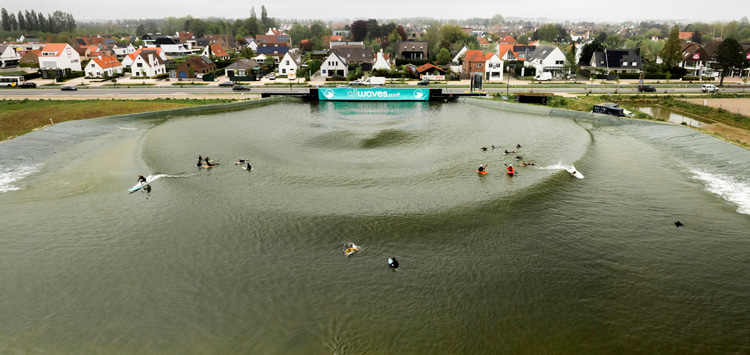
360-Degree Wave and Beaches
But how does AllWaves work? It starts with the wave itself.
At the heart is a durable textile pillow that sits on the basin floor at the center of the lagoon.
Hydraulics move the pillow up and down, pulling water toward it and pushing it away in an orbital motion, mimicking the way waves travel in the ocean.
The result is a range of waves - hence the name AllWaves - that can work for surfers of all abilities.
Height, speed, power, and wave shape are all customizable with the touch of a button.
"Our wave generation knowledge is captured in intelligent algorithms with infinite wave variability. A simple push on the app makes the desired wave roll," notes AllWaves CEO Steven Nauwelaerts.
The Belgian technology can create any wave you want, from expert barrels to softer, rolling waves that suit first-time and novice surfers.
The entire system is submerged four meters below the surface, out of harm's way and out of sight.
AllWaves uses a natural-looking lake design as its wave basin, with 360 degrees of gently sloping "beaches," just like the real thing.
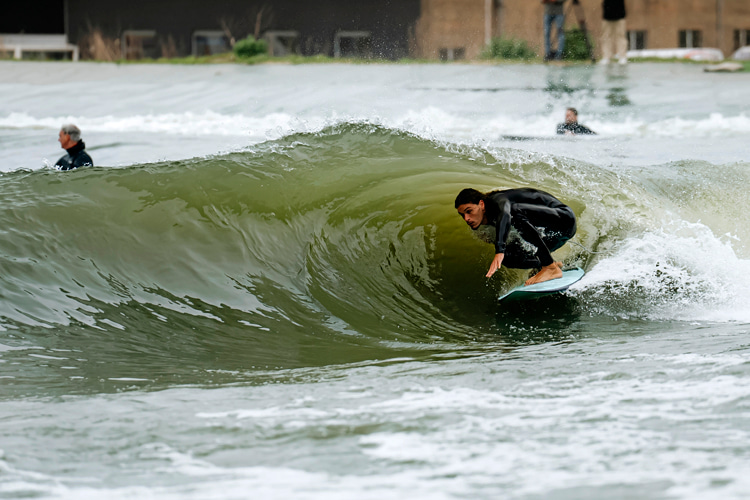
A Wave Every 7 Seconds
Surfers of every ability can enter and exit the water safely and easily. There are no vertical walls and hard corners.
The unique pool design aims to create a natural look and feel, making the experience safer and more aesthetically pleasing.
The AllWaves system generates a wave every seven seconds, with no necessary downtime to dampen wave energy.
The idea is that surfers get more waves per session, and investors witness an unparalleled return on investment (ROI).
The company claims to be able to generate waves of up to six feet (1.80 meters) in a 100-meter by 100-meter water basin that can hold 64 surfers simultaneously.
There's a left and a right-hand point break and an A-frame peak.
In addition to safety and aesthetics, AllWaves claims to be the most energy-efficient in the market.
The proprietary pillow technology uses a hydraulic system that works in resonance with the water.
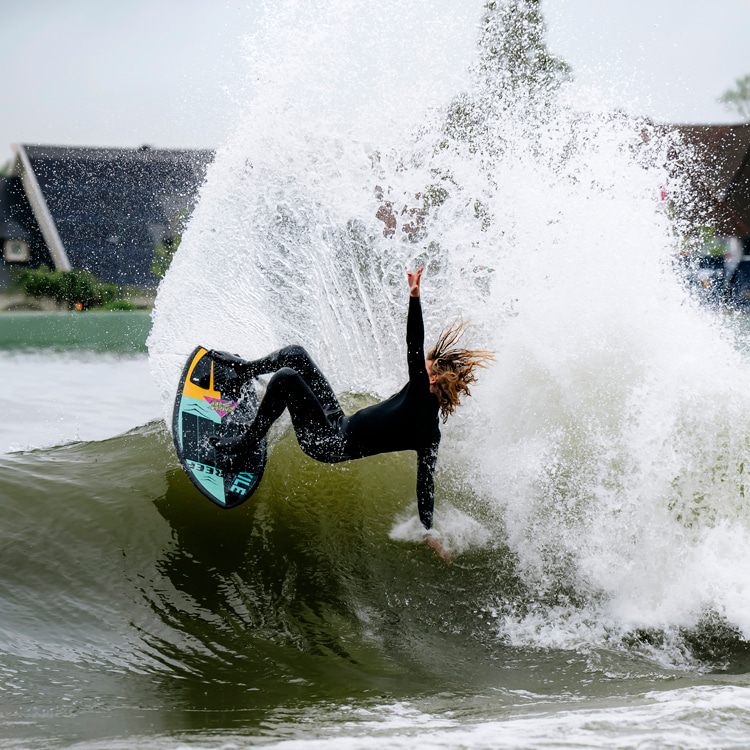
Controlled by App
Finally, AllWaves offers a lifelong guarantee.
To ensure quality and all-year-round dependability, the startup partnered with leaders in hydraulic manufacturing and high-tech textiles.
The combined impact of proven tools and machinery, which can be operated with an app, makes for reliable and user-friendly technology.
"I'm thrilled to see the positive responses of the market," adds Nauwelaerts.
"As a passionate surfer who has spent a decade working in renewable wave energy, it's a dream come true to introduce an energy-efficient wave-making technology."
Three-time United Skim Tour champion Blair Conklin and five-time world championship medalist snowboarders have already tested it.
R&D Facility Is Pumping Waves
The exact location of AllWaves' first commercial wave pool may not yet be unveiled.
Nevertheless, Steven Nauwelaerts already indicates that in addition to numerous international locations, at least one facility project will be installed in Belgium.
In 2021, in cooperation with the municipality, a location was sought for a prototype full-size wave pool, enabling a first phase of research and development activities.
The AllWaves technology is currently on display at the company's site in Natiënlaan, Knokke-Heist, Belgium, where surf park developers can witness it firsthand.
The test center powers its test waves entirely with renewable energy for a carbon-neutral footprint.
The wave pool technology's low operating costs ensure its numerous applications, ranging from recreational surf parks, water parks, and professional practice venues for surf federations to mixed-use real estate developments.
Words by Luís MP | Founder of SurferToday.com
por Surf News | Headlines and Top Stories https://ift.tt/mqQz3UF