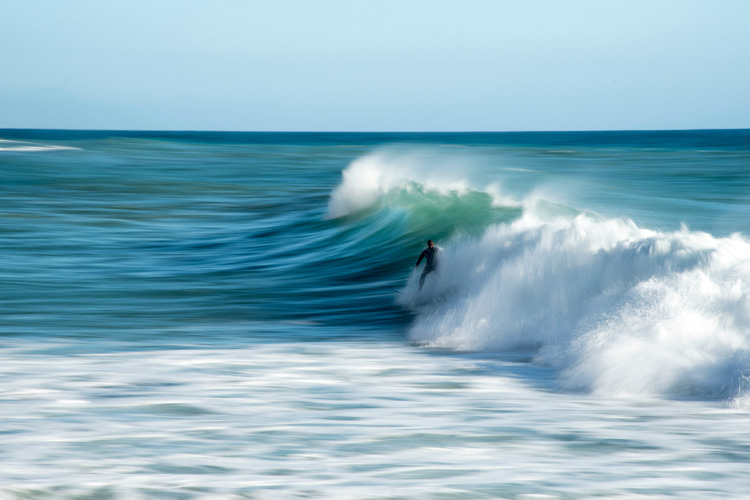
Italy is not the first country you will think of when planning a surf trip around Europe.
However, with its 4,720 miles (7,600 kilometers) of coastline and over 320 rideable surf breaks, there are plenty of fun opportunities popping up when favorable winds and swells align.
The Italian Peninsula is in the heart of the Mediterranean Sea.
This enclosed region depends on the low-pressure fronts from the north, west, or south and enough wind to generate surfable waves around "The Boot."
So, even though consistency is not the best word to characterize Italy's surfing potential, there are certainly plenty of different surf spots capable of producing a few fun gems.
Can you get barreled in an Italian wave? For sure? Are there overhead ramps on offer? Definitely.
The Italian Northwest
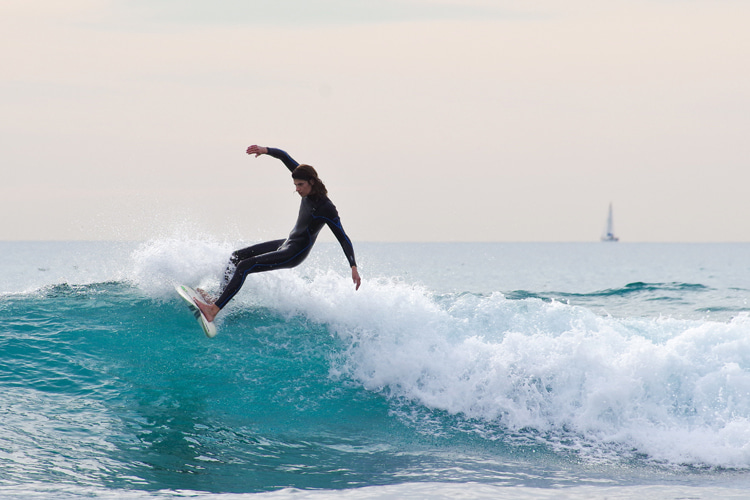
Liguria is probably the most reliable surfing region in Italy.
The crescent-shaped area that goes from San Remo in the west to Viareggio in the East hosts a series of above-average waves along its 175-mile (285-kilometer) coastline.
The secret lies in the geographical position facing the Ligurian Sea and getting the remaining swell energy entering the Strait of Gibraltar, as well as the exposure to the Mistral wind, the driving force for surf in Northern Italy.
Mistral helps build decent swells on the Ligurian reefs by blowing offshore along the Mediterranean coast all the way from NW Italy and across the French coast toward NE Spain.
Ultimately, the region gets around 120 days of surfing per year, even though most could be whipped by onshore winds and small waves.
Water temperatures along the western coast of Italy span from 53-78 °F (12-26 °C).
History
The saga of Italian surfing commences with Peter Troy, the renowned Australian surf explorer, who documented his first ride on an Italian wave in Genova (Liguria) in 1963.
His venturesome exploits, though ahead of their time, failed to resonate with the local populace until the late 1970s and early 1980s, when the inaugural generation of surfers emerged.
Inspired by cult classics like "Big Wednesday" and initial forays to oceanic swells (predominantly in Biarritz), numerous small communities sprang up simultaneously across the peninsula.
Tuscany's Viareggio took center stage, becoming the nucleus where the inaugural club (Italia Wave Surf Team), the premier shop (Natural Surf), and the maiden contests took root.
Leading the charge in this region were Michele and Alessandro Dini, while in Genova, the Marco and Alberto Fracas brothers reveled in the waves of Bogliasco.
Barreling Waves in the Ligurian Sea
Varazze is one of Italy's most popular surf breaks.
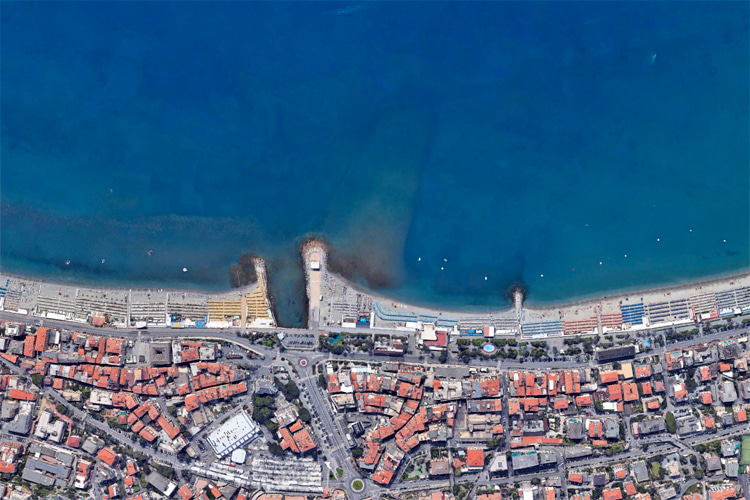
The spot is located 20 miles (35 kilometers) west of Genova in the coastal village with the same name.
It is the focal point of many Italian surfers and French surf travelers.
La Secca, Varazze's main break near Molo Marinai d'Italia, is a powerful A-frame peak that shines with SW and SE and a strong Mistral NW wind.
The right-hander provides a long, workable ride that will take you all the way to the inside; the left-hander provides a shorter yet intense wave-riding experience.
The local shallow human-made reef made of rocks is one of the secrets of this Italian gem.
Interestingly, Varazze's wave quality is the result of one of those random events that suddenly create a wave.
The surf spot's bed of rocky stones was formed by debris inadvertently dumped from the mountain during the works to build a motorway in the 1960s.
But for the barrels to come to life, surfers need windless or offshore wind conditions.
This Italian surfing machine hardly varies, making it sometimes "too perfect." It reminds us of something between a Southern California point break and a southwest of France jetty break.
To get to the peak, you either paddle around it from down the beach or try jumping from the nearby pier on a smaller day.
Varazze is mostly a wave for intermediate and advanced surfers, so assess your experience level before paddling out, especially during wintertime.
The take-off could be challenging, so prepare to hold on to your rail.
If you survive the early seconds of the ride, think about the incoming steep inside section that will want to suck you and your board.
Also, respect the local surfers, as the surf break often gets crowded on average, good and epic days.
In November 2023, Varazze witnessed one of the biggest days of waves of the decade, with double overhead walls of water marching relentlessly toward the shore, courtesy of Storm Ciarán's SW swells.
Although waves break on average once every three days, the best season is Spring.
Words by Luís MP | Founder of SurferToday.com
por Surf News | Headlines and Top Stories https://ift.tt/f0XKwd7