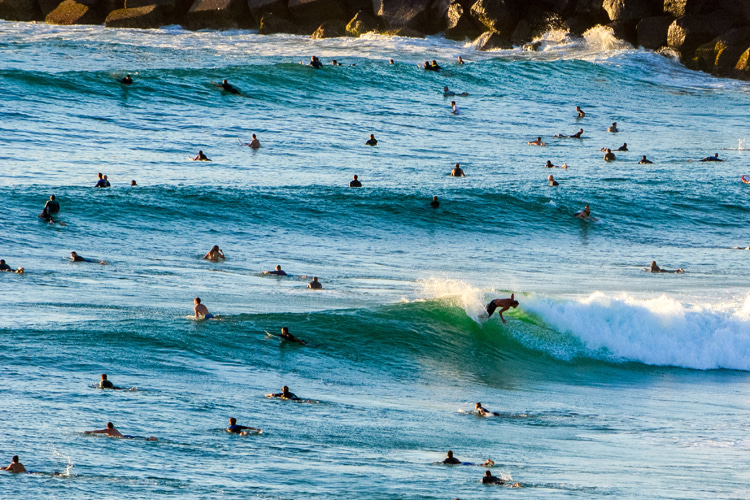
Life changes when you start working. And so does your surfing.
Most of the freedom and flexible time schedules you had before you became a grown-up adult with responsibilities and bills to pay ends or gets seriously axed when you get your first job.
The days when you could put on a wetsuit and just paddle out when the surf's great slowly vanish as you progress through your 20s and 30s.
Although this is not an inevitable scenario for every surfer out there, it's the most common one.
So, 99 percent of all hard-working recreational surfers end up with two days to shred and get their golden share of waves.
We end up in the so-called weekend warrior basket, the silent majority that surf media professionals, influencers, and wanna-be pro surfers often mock.
And then, if you commit the ultimate sin of starting a family, things get even worse for a while - weekends turn into months and years.
Some longtime surfers even lose the will to get in the water and enjoy the pleasures of catching a few "just like in the old times."
Passion fades away, and aging doesn't help either.
So, if Saturday and Sunday are the only days left for a quick surf escape, we try to make it work, come rain or come shine.
One of the best ways to transform these golden opportunities into pleasurable sessions is by choosing a consistent break, ideally close to home.
The problem is that we all follow the same rationale.
Consequently, beaches known for their average-to-good conditions all year round get crowded, if not impossibly crowded.
And then, on top of that, there's the uncontrolled surf school army, taking over the battlefield from the early hours of the morning until the sun sets and darkness kicks in.
Pain Point Reached
One of these Saturdays, I exercised my weekend warrior right to ride a few good waves for an hour.
I tried to time the tides and be at the beach as early as a working man in his 40s could.
I guess I was ready to get wet before 9 in the morning.
By the time I was paddling out with my hair still dry, there were already a few partners in crime looking like they'd had their weekly share of fun.
No worries. The vibes were good.
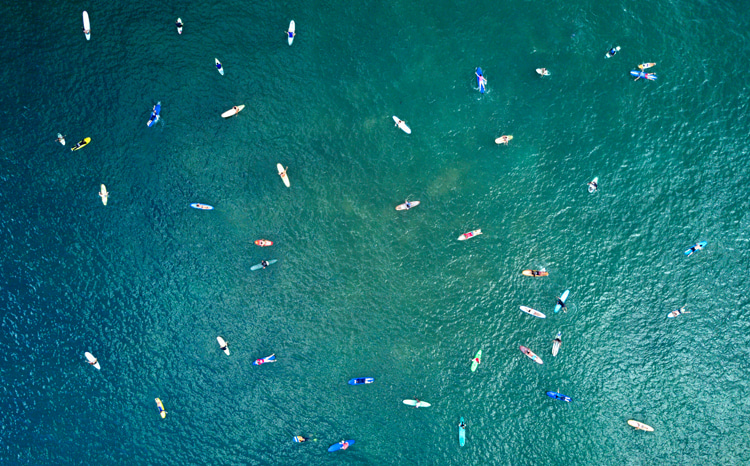
However, in less than half an hour, I was already surrounded by dozens - literally - of first-timers wearing their multi-colored jerseys, each representing a surf school business.
Luck is also not on my side.
My home break is one of the busiest in Europe, located within bike, metro, or car distance from one of the most en-vogue tourist destinations in the Old Continent of the last decade.
Despite being a long beach break with multiple peaks that pump around 300 days of surfing a year, its resources are not infinite.
Moreover, space is limited.
And if you think you can teach beginner surfers the basic rules of surf etiquette, forget it.
They will not look left and right before paddling into a perfect wave or a close-out guillotine.
They don't care, and instructors often follow the pattern.
Suddenly, I was encircled by colored jerseys, soft-top surfboards, and all sorts of in-between set chats.
The word "surrounded" could fit in the concept of vital space a surfer needs to exercise their art.
But this wasn't the case. I had surf pupils within a board's reach.
I had to plan how to turn the board around to catch a wave. And when I was successful, there was another challenge ahead - to complete a ride.
I am not one of those who whistle or yell at others to ensure my priority is respected.
In case of imminent danger, I respectfully emit a warning - usually, "Attention!" - to avoid disaster, injuries, and surfboard dings.
So, every time I caught a wave, I would have a drop-in incident, putting an end to an average ride.
And then, they smile back at you while still riding their boards prone toward the beach.
One time is OK; twice could happen. But three, four, and five times is a pattern.
At some point, I decided to call it quits and paddled in.
As soon I was taking off my leash my leash, I looked back at the lineup and realized this wasn't surfing.
The peak I had chosen to release my weekly stress had around 20-30 people thinking they were having fun.
They were all six feet apart, probably thinking they were having the time of their lives.
I immediately told myself I would not come back here again on a weekend.
This was not surfing; this was not fun. I actually didn't even know what that was.
Was it masochism? The need to belong to a cool tribe? A photo-op for social media?
How can they feel they're experiencing the exhilarating rush of walking on water when there's so much noise and many boards around them?
As I walked up the beach, I felt equally frustrated and depressed.
Getting Away
I am one of those who believe the world would be a better place if more people surfed.
I am genuinely convinced my beloved pastime improves people's lives.
But I cannot deny that getting surfing into the mainstream and a wider audience is simultaneously killing the experience for everyone.
Is there a balance between these apparently opposing worlds? Where do you draw the line between healthy and enjoyable lineups and promoting surfing and its virtues?
In the past, I adopted the rule that tells my inner self to choose an average peak that is often less crowded instead of a quality wave where 100 weekend warriors are jockeying for position.
But the latest lesson learned is that I do have to drive away from my home break and try my luck in alternative spots where there's barely a soul breathing.
Until my new secret spot gets crowded, and I stop surfing forever. Is this my destiny, or am I getting old and picky?
Words by Luís MP | Founder of SurferToday.com
por Surf News | Headlines and Top Stories https://ift.tt/tHwpEQC