Pular para o conteúdo principal

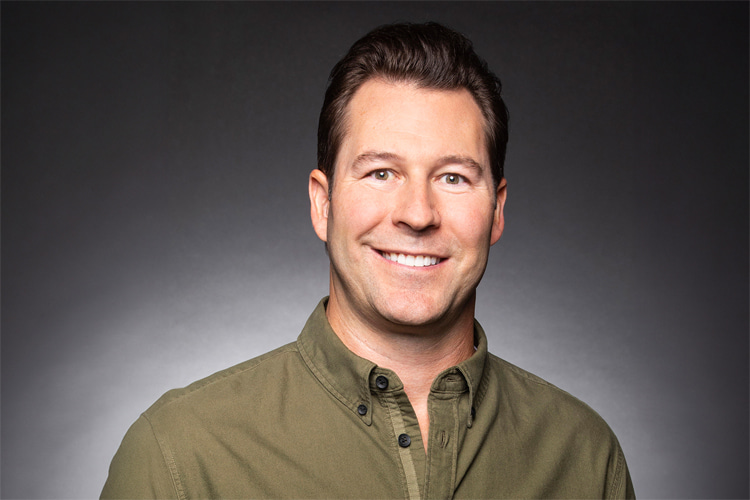
Ryan Crosby named CEO of the World Surf League

Ryan Crosby: the new CEO of WSL | Photo: WSL

Ryan Crosby is the new chief executive officer (CEO) of the World Surf League (WSL).

The professional surfing circuit chose the successor of Erik Logan, the man who led WSL from January 2020 to June 2023.

Since his sudden departure, Emily Hofer, WSL's chief people and purpose officer, and Bob Kane, chief operating officer and chief legal officer, served as interim CEOs.

Ryan Crosby has two decades of experience working as a marketing professional in technological and entertainment companies like Microsoft (2006-2010), En Masse Entertainment (2010-2012), Activision (2012-2015), Netflix (2015-2018), Hulu (2018-2021), and Riot Games (2021-2024).

"What I love about surfing is that it's an incredibly competitive sport, but it's also a way of life, a passion, and a deeply committed global community," said Crosby.

"I am excited to leverage my experience to elevate the WSL brand, deepen our connection with fans, and continue building something surfers can be proud of."

Balancing Profit and Essence

The decision to choose a CEO with a marketing background rather than sports management experience is a sign of the WSL shareholder's priorities.

In other words, Dirk Ziff, the owner of WSL, will continue to get competitive surfing to the mainstream via partnerships with global traditional and new media platforms and providers.

Monetizing pro surfing has been a long-term challenge, and it often conflicts with the hopes and wishes of WSL fans and followers.

The cost of each Championship Tour (CT) event, including logistics, human resources, and prize-money package, was at some point around $3 million, despite the goal to bring it to $1 million.

The new CEO of WSL will have to strike a sensitive balance between keeping the show appealing to the core audience and expanding its reach to a wider non-surfing public.

WSL's long-term vision is to become a media platform capable of generating revenue digitally and via agreements and deals with cable TV and multinational distribution channels.

"Ryan's exceptional track record across some of the most important media platforms, his authentic, approachable manner, and his genuine passion for surfing make him a great fit to lead the WSL into its next chapter of growth and innovation," concluded Dirk Ziff.


Words by Luís MP | Founder of SurferToday.com


por Surf News | Headlines and Top Stories https://ift.tt/mQrjt6N

Postagens mais visitadas deste blog

Duke Kahanamoku reflects on surfing, Olympics, and old Hawaii in 1966 interview

Duke Kahanamoku is the most influential surfer of all time and is often hailed as the father of modern surfing. There is nearly no one questioning these titles. Recently, Public Broadcasting Service (PBS) Hawaii unveiled a never-before-seen interview with the legendary surfer and Olympic swimmer. In the 1966 episode of Pau Hana Years, a seminal Hawaii television program that aired on KHET-TV (now PBS Hawaii) for 16 years, running from 1966 until 1982, Bob Barker chats with Duke Kahanamoku, then 76. The conversation drifts from royal ancestry to Olympic lanes, from Hollywood sets to a surfboard shaped by hand, tracing the outline of a life that helped define modern surfing and Hawaii's public image in the 20th century. And if you know little about the man who dreamed of getting surfing into the Olympic Games, this is a precious piece of history. A name with history, worn casually The interview starts with Kahanamoku explaining that "Duke" is not a title but his giv...

The hydrodynamics of surfboard fins

Have you ever wondered why a surfboard fin looks like that? It is a single or a set of fixed blades or keels located under a board, near the tail, often no bigger than a hand. Yet that small surface is where much of the surfboard's behavior takes place. Speed, hold, looseness, and the feeling of control all trace back to how water moves around fins. The physics of surfboard fins falls under hydrodynamics, the study of how fluids behave in motion. So, according to science, they feature a shape designed to turn flowing water into several forces. Let's take a look at what's at stake when fins and water interact. Lift and the feeling of control One of the key variables in hydrodynamic terms involving surfboard fins is lift. When a surfer leans into a turn, the board tilts and the fins meet the water at an angle. The angle is enough to create a pressure difference between the two sides of the fin. Water speeds up on one side and slows on the other. The result is a sidewa...

How paddleboarding transforms your body and mind

Adventure is on our doorstep. With so many different bodies of water available to paddleboarders, from city canals to coastal routes, we can find adventure in places much closer to home than people might initially expect. According to the Canal and River Trust, 50 percent of people in England and Wales live within just eight kilometers of a canal or river, and eight million people live less than one kilometer away. I had lived within just a few kilometers of the Leeds and Liverpool Canal for years and never really explored it before stand-up paddleboarding (SUP) came into my life . The challenge created both a new perspective and a deeper love for where I lived and the areas which I passed through. On my coast-to-coast journey, I slept in my own bed for two nights as the route passed through my then hometown of Skipton, yet I felt I was on a grand journey of discovery. We are braver, stronger, and more resilient than we think. SUP not only helps us feel more connected to our va...