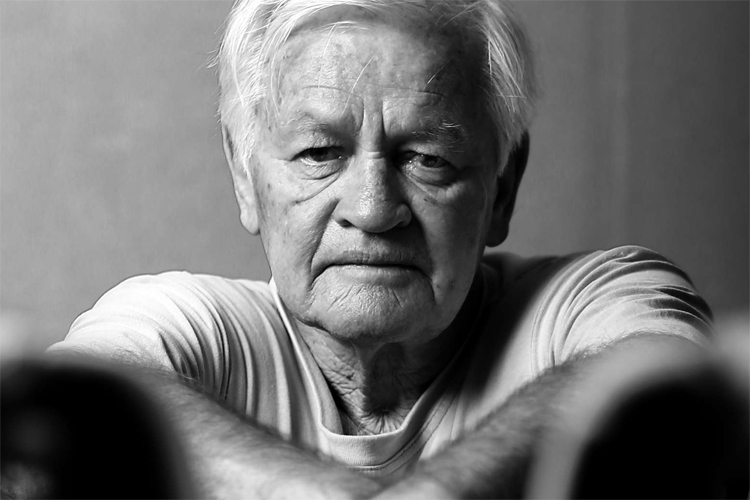
Geoff McCoy, one of the world's most innovative and creative surfboard shapers, passed away at home in Byron Bay, Australia, at the age of 79 after complications following a heart attack.
The pioneer of the shortboard revolution was born in 1944 in Gosford, New South Wales.
As a youngster, the son of a farmer and the Killcare Surf Club captain was a talented horseman.
Geoff started surfing at age 14 during his school holidays at Avoca Beach.
He shaped his first boards at 17 for Bennett Surfboards and Keyo Surfboards after concluding a five-year apprenticeship in wood and metal pattern making.
He was also the co-founder of M&M Surfboards.
In the 1970s, the Australian set up his own business, McCoy Surfboards, in Brookvale, a Sydney suburb.
Ray Richards, the father of world surfing champion Mark Richards, encouraged him to do so and ordered the shaper's first ten creations.
In just half a year, the McCoy factory produced 65 boards weekly.
It marked a vibrant era as Geoff crafted boards for numerous top surfers and embarked on his inaugural journey to Hawaii.
In 1978, Geoff dedicated a year to California, establishing McCoy USA and collaborating with Jeff Hakman on design innovations.
By then, McCoy had shifted his factory to Avoca Beach on the NSW Central Coast, laying the foundation for the expanding McCoy empire across Japan, the USA, and Hawaii.
Geoff's instinctive desire to experiment and try new things got him into the world of twin-fin surfboards, making him one of the first Aussies to shape them.
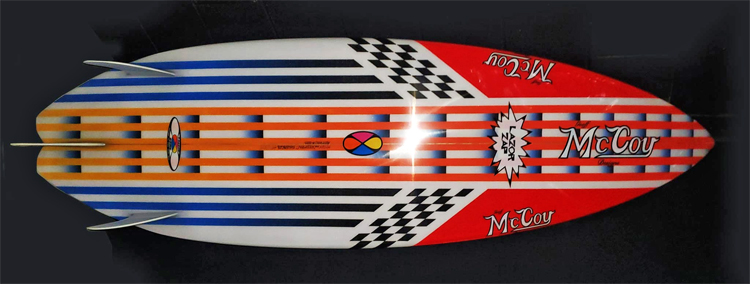
The Lazor Zap
However, what really changed for the NSW surfer-shaper was the famous "Lazor Zap," a surfboard model with a steep rocker and a sharp nose.
The board allowed surfers to get more vertical, engage in tighter top-to-bottom surf lines, and take more risks while performing radical maneuvers.
According to surf historian Matt Warshaw, the "Lazor Zap" allowed surfers to "move the board's trimming sweet spot - usually a foot or so ahead of where the rider stands while turning - back toward the tail section so that, in theory, the surfer would not have to move their feet."
The magical model helped team rider Cheyne Horan lock in two runner-up finishes in the 1981 and 1981 ASP World Tour.
Here's how Geoff McCoy described his iconic template:
"The concept of the 'Lazor Zap' is based on my energy theory, which explains how energy turns into wave formation and how objects react with those formations."
"The original 'Lazor Zap' was designed with short arc, reactive high-powered surfing in mind. The surfer was able to stand in one position, not having to move their feet to perform their maneuvers and this is exactly how the boards performed."
"The pulled nose allowed the board to elevate very quickly as it reduced the length of rail being used when the board is turning."
"In turn, this allowed for more maneuvers to be performed while the surfer was standing in a fixed position on the wide thick supportive tail which generates greater pressure and easier reaction."
"The advantages were many - easier to paddle, stand in one position to ride the wave, quicker reaction from the extra volume, easier turning from less resistance, and ability to surf at a faster speed."
"In effect, everything required from them, the 'Lazor Zap' designs delivered at all levels of performance."
An Inspiring Surfboard Craftsman
McCoy's lineup also featured other groundbreaking designs, such as the "Nugget," "Quazor Zip," and "Astron Zot," each presenting its distinct features and riding opportunities.
Simon Anderson's thruster revolution soon eclipsed McCoy's avant-garde models and designs sold via Lost and Channel Islands.
But the mentor of the three-fin setup would Call Geoff one of the five inspiring figures behind the thruster.
Meanwhile, a business manager hired by Geoff methodically accumulated debt for McCoy.
The shaper became aware of this when a longstanding associate inquired about outstanding payments.
Geoff contacted the manager from Sydney, only to find the accounts wiped from the computer upon his return to the Avoca factory.
He had lost around 500,000 dollars.
Faced with bankruptcy or receivership, bankruptcy was unthinkable for Geoff, who valued honor and integrity.
Reluctantly, he placed the flourishing business under receivership, liquidating assets to settle debts in 1984.
McCoy never stopped shaping boards - in Hawaii, Tweed Heads, and Byron Bay - or inspiring craftspeople worldwide to rethink his greatest models.
The man who spread the tear-drop-shaped surfboard smoothly blended philosophy, pragmatism, and technically superior foam-mowing skills into his out-of-the-box designs.
In 2018, Geoff highlighted the surfers who profoundly influenced his shaping philosophy: Gerry Lopez for hold and release, Midget Farrelly for the outline, and Nat Young for rails.
McCoy might have left us, but his rideable legacy lives.
Words by Luís MP | Founder of SurferToday.com
por Surf News | Headlines and Top Stories https://ift.tt/69pHJsv