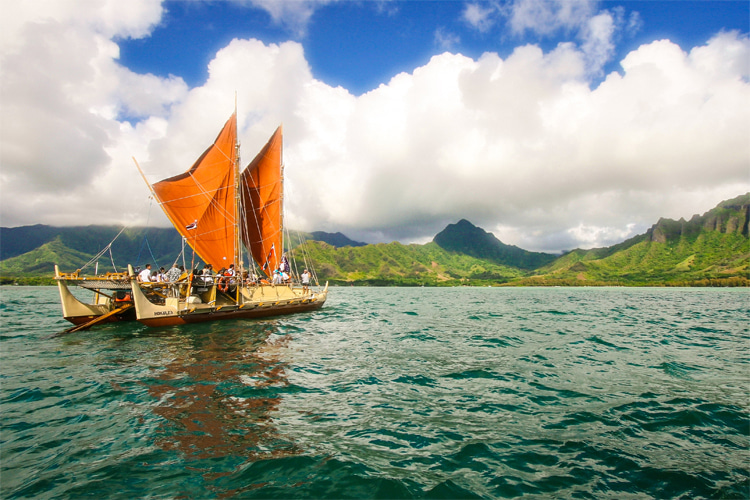
Classified as "Critically Endangered" by UNESCO, the native Hawaiian language has approximately 2,000 speakers. Here's what makes it so special.
Hawaii is a unique archipelago with an ancient Polynesian culture.
It's also home to an exclusive endemic ecosystem, where 90 percent of its fauna exist nowhere else in the world.
While the Hawaiian Islands have existed for over 3.4 million years, the earliest documented record of the oral language ('Ōlelo Hawai'i) dates back to 1778, when Captain James Cook set foot on the island of Kauai.
It is estimated that, at the time, between 400,000-800,000 natives spoke the indigenous language.
Hawaiian belongs to the Polynesian language family, sharing similarities with Tongan and Samoan.
Although speakers of Hawaiian may find some basic mutual understanding with speakers of other Polynesian languages, it's important to note that these languages are not interchangeable.
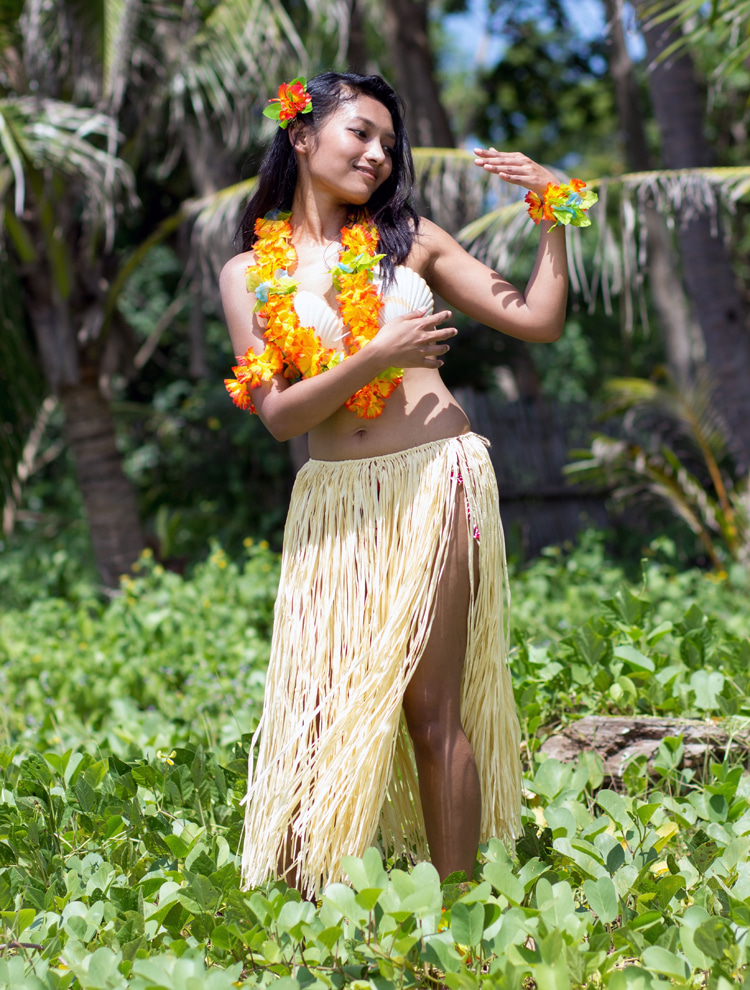
The World's Shortest Writing System
However, the colonization of the archipelago devastated the local dialect.
The British occupiers took over Hawaii in the late 18th century and 19th century, and by 1820, the Christian missionaries made sure to convert the Hawaiian language to a 13-letter Latin alphabet.
It consisted of five vowels (a, e, i, o, and u) and eight consonants (h, k, l, m, n, p, w, and '), used to translate the Bible into the local language.
The 'okina, often represented by a grave accent (`), a left single quotation mark (‘), or an apostrophe ('), seems to have appeared around 1850.
The special character is considered the eighth consonant and indicates a glottal stop, i.e., a break, stop, or separation between letters, changing the meaning of words.
Curious fact: there's an 'okina in the word Hawai'i, making the correct spelling "ha-VAI-ee."
Last but not least, there's the kahakō, the macron that stresses or lengthens the marked vowel.
Unlike what most people think, the longest word in the Hawaiian language is not humuhumunukunukuāpua'a (freely translated as "triggerfish with a snout like a pig").
The longest 'Ōlelo Hawai'i word is lauwiliwilinukunuku'oi'oi (freely translated as "long-snouted fish shaped like a wiliwili leaf") because the two 'okina count as consonants.
Despite having the world's shortest alphabet and exactly 50 percent fewer letters than the English writing system, Hawaiian is incredibly versatile, rich, and descriptive.
For instance, the word aloha does not have an exact or equivalent translation in English, and alongside mahalo, it is the two most used words in Hawaiian.
Another particular curiosity is that all Hawaiian words end with a vowel, and vowels always follow consonants.
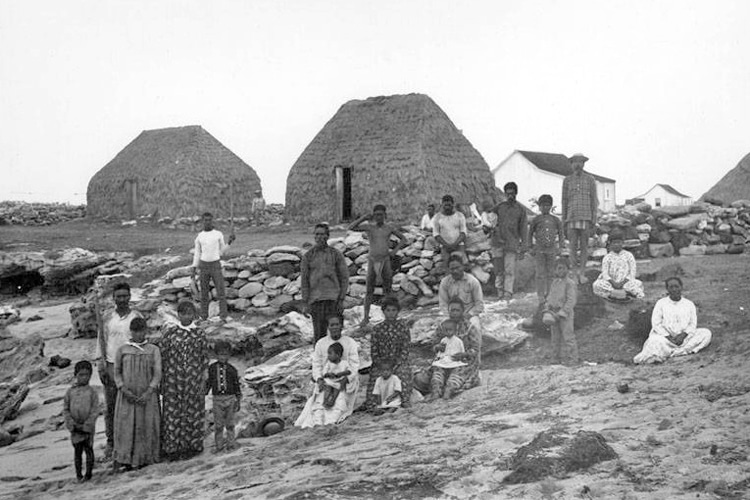
'Ōlelo Hawai'i and Pidgin
Following Hawaii's annexation by the United States in 1898, the Hawaiian language was prohibited in educational institutions and government settings.
However, individuals retained the freedom to speak Hawaiian; notably, 14 distinct newspapers continued to be published using the Hawaiian alphabet during this period.
Being one of the oldest living languages on the planet, it became a national treasure when the 1978 Hawaii State Constitution awarded it official status.
Nowadays, Hawaii is the only US state with two official languages: Hawaiian ('Ōlelo Hawai'i) and English.
Purists and full-blooded Hawaiians, though, still reject the language's established grammar, noting that it has been distorted and adapted to Western and colonial norms.
There is an ongoing debate on which language version should be preserved, academic or informal Hawaiian.
Nevertheless, Hawaiian Pidgin, a unique Creole language, is more spoken in Hawaii than Hawaiian.
Also known as Hawai'i Creole English (HCE), Pidgin has 600,000 Hawaiian residents who speak it natively and around 400,000 who adopt it as a second language.
The dialect emerged on Hawaiian sugar plantations during the 1830s as a means of communication among workers from diverse corners of the globe.
It resembles and sometimes sounds like a mix of Japanese, Portuguese, American English, and numerous other languages.
In one particular location, the original Hawaiian ('Ōlelo Hawai'i) remains dominant: the small "forbidden" island of Ni'ihau (pictured above), inhabited by fewer than 170 people.
Here, residents persist in using Hawaiian as their primary language for daily communication.
Aloha State lawmakers are trying to pass bills that will make Hawaiian language courses mandatory for high school students.
Words by Luís MP | Founder of SurferToday.com
por Surf News | Headlines and Top Stories https://ift.tt/JarBiVT