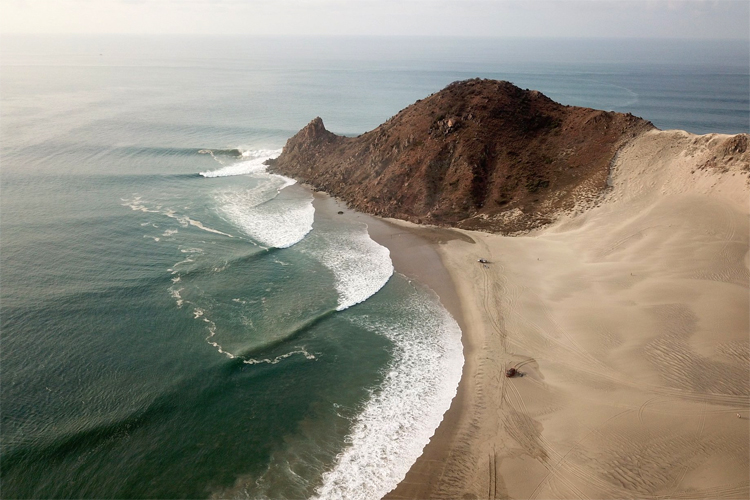
Oaxaca is one of Mexico's surfing treasure states. The south-facing territory receives privileged swells from the Pacific with a rugged coastline that produces all types of waves.
It's hard to believe that just 150 miles (240 kilometers) west of Puerto Escondido's Playa Zicatela, the Mexican Pipeline, there's such wonder of Nature like Punta Conejo.
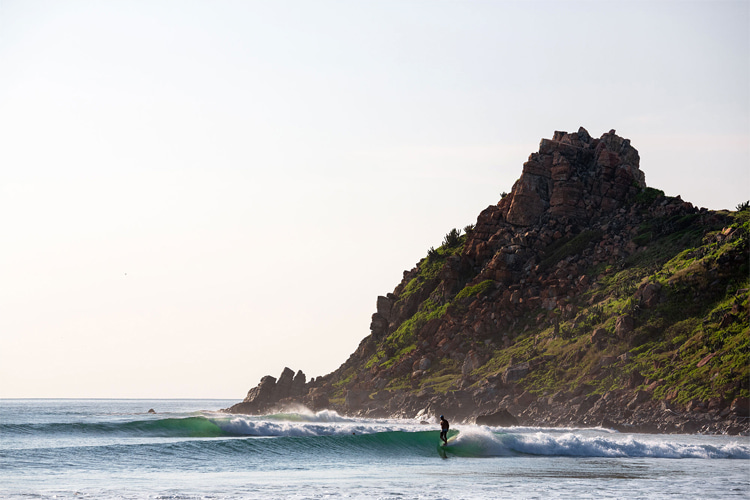
We're talking about a longboarder's dream point break that can take surfers on a meditative and life-changing 300-500-meter ride.
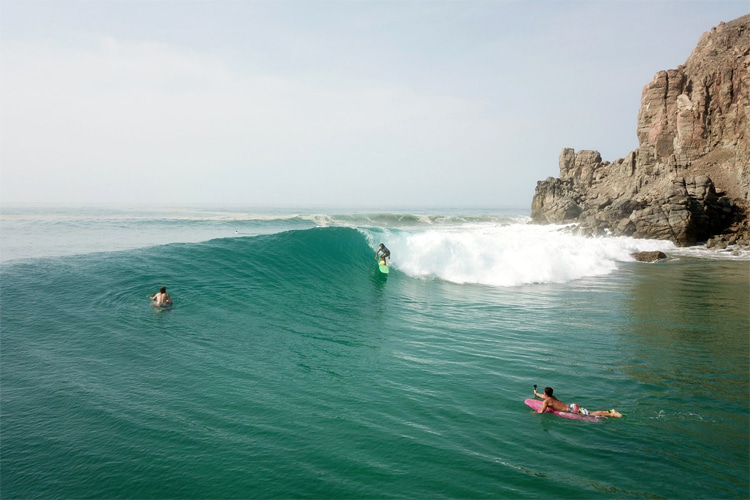
Unlike its thunderous beach break sister, Punta Conejo is an elegant, smooth, and perfectly peeling right-hander that will get any wave rider paddling out, no matter the size, weather, or water temperature.
It's not the only pristine surf break available near Salina Cruz.
It's part of a nearby premier list of luxury surf spots, including Punta Chivo, Playa Abierta, La Ventosa, Punta Chipehua, and Playa Bamba.
Punta Conejo works best with an S swell and light cross-shore NE-E winds. Nevertheless, it also handles N-NW wind well.
But it's the ride that makes it unforgettable and addictive.
On a good day, you'll be greeted with a relatively fast ride and plenty of workable wave faces and lips.
Occasionally, you may find a barreling opportunity in the inside section.
The Mexican point break is relatively isolated, which could be good and bad news simultaneously.
Because it has no direct roads or parking lots, you'll probably need a four-wheel drive and a local guide to reach Punta Conejo.
Luckily, the remoteness also brings some quietness and a less crowded lineup, even though, with the right conditions, you won't probably surf alone.
The Oaxaca longboarders' hotspot works best at low tide and when Southern Hemisphere swells hit the coast from May to October.
In those conditions, you witness this natural surf machine pump perfect lines in the two-to-six-foot range.
Threatened Forever
Despite the importance of surfing for the local economy and the sensitive ecossystem that gravitates around it, Punta Conejo has been under constant serious threat from harmful human activities.
Non-governmental surf organization Save the Waves Coalition has been working for years to protect this stretch of coastline.
In 2019, the activists launched campaign #SalvemosPuntaConejo to stop the construction of a new industrial port project in the vicinity.
Save the Waves feared the renowned surf break could be destroyed and raised awareness for the need to protect the area around Punta Conejo.
The NGO worked with local entities to find alternative solutions to the port project that would have a lower impact on the surf ecosystem and the local economies that depend on it.
Technical studies were developed to propose the establishment of a Ramsar Site, a UNESCO initiative that lists wetlands of international importance.
However, in October 2022, Punta Conejo was hit hard by an ecological disaster.
A fuel oil spill originating from a Pemex offshore platform devastated beaches in Salina Cruz, heavily impacting the point break along with other areas.
The oil slick stretched for at least six miles (10 kilometers), reaching beaches like Playa Brasil, Playa Azul, and Playa Guelaguichi.
Reports also documented oiled birds as far as 65 miles (105 kilometers) away.
The spill significantly affected tourism, fishing, and the local fauna, raising concerns about Pemex's environmental practices and aging infrastructure.
Local authorities closed the beaches to tourism and fishing activities. The exact volume of oil spilled remains unknown.
Now, Save The Waves Coalition and local partners (Reservas de Surf Mexico, Wildcoast, and Union de Surfistas y Salvavidas de Salina Cruz) are proposing the first-ever coastal "Áreas de Protección de Flora y Fauna" (Flora and Fauna Protection Areas) in Oaxaca.
The Punta Conejo Protected Area will preserve and safeguard:
- 3,503 acres of land;
- 1,277 acres of mangrove forest;
- 500+ fishermen and salt workers benefiting from the nearby lagoons;
- 40+ species of bird;
- 6.5 miles of coastline;
- 4 local communities;
- 4 species of turtle, including the endangered olive ridley;
- 3 surf breaks: Punta Conejo, Punta Chivo, and Punta Escondida;
Punta Conejo's Guardian Angel
At the heart of this struggle is a local partner, friend, and defender of Punta Conejo: Uriel Camacho.
Uriel is originally from Salina Cruz, one of the towns nearest to Punta Conejo.
One of the first locals to ever surf, Punta Conejo was where Uriel and his friends learned to ride waves almost 30 years ago.
At the time, there were no tourists in the area and only a few local surfers like Uriel, who surfed the magical point break.
Despite the 3.7-mile (six-kilometer) walk from the nearest bus stop, it was the only surf spot he paddled out to for years.
"I want to see Punta Conejo protected because it is a wonder of surfing, not only in Mexico but in the entire world," explained Camacho.
"Our livelihoods depend on this ecosystem. Punta Conejo is part of our lives. We love this place with all our hearts."
"It must be preserved and protected so that it can be enjoyed by all human beings forever."
He has seen firsthand how the natural beauty of the coastline has benefited the community - the small local markets are thriving due to the visitors and surf guide services providing sustainable revenue.
Surf tourism has also positively impacted the younger generations, with a new wave of surf fever among the local community.
Uriel's commitment to the Punta Conejo Campaign is unmatched.
He is helping lead the local effort to protect Punta Conejo and the surrounding environment.
Today, Camacho is a surf guide and surf photographer in the area.
With two daughters, the Mexican has already taught his eldest to surf Punta Conejo and hopes the point can be enjoyed by future generations.
Punta Conejo, Mexico | ID and X-Ray
Location: Punta Conejo, Salina Cruz, Oaxaca, Mexico
Type of Wave: Right-Hand Point Break
Length: 300-500 yards (300-500 meters)
Best Swell Direction: S
Best Wave Size: 2-6 Feet
Best Wind Direction: NE-E, N-NW
Best Tide: Low
Best Time to Surf: Wet Season (May-October)
Skill Level: Intermediate and Advanced
Best Board: Longboard, Funboard, and All-Around Shortboard
Crowd: Moderate
Water Quality: Good
Hazards: Locals
Bottom: Sand
Water Temperature: 66-84 °F (19-29 °C)
Getting There: Paddle Out
por Surf News | Headlines and Top Stories https://ift.tt/RMvKg4k