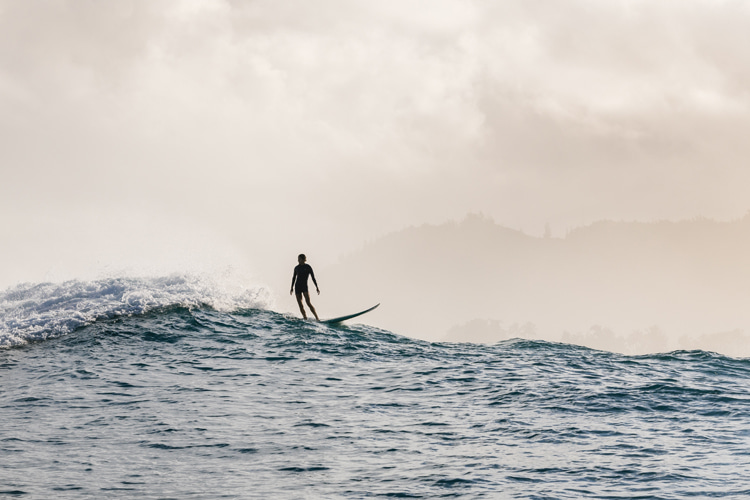
Morning seasickness in surfing refers to the temporary, rough, and messy ocean conditions experienced by surfers during early morning sessions, particularly prevalent in locations like California, Hawaii, and Bali.
Surfers are a sports tribe that usually wakes up early to enjoy glassy, uncrowded waves.
The so-called dawn patrol enthusiasts tend to believe that when it comes to getting the best ride, the earlier, the better.
But is it always like this? Do the early morning hours only bring perfect, windless swell lines?
Maybe not.
If you've been surfing for a while or have watched a surf contest's online broadcast, you might have heard about the concept of "morning sickness."
It's obviously not the same as the condition women experience during pregnancy.
The key to understanding morning seasickness, the ocean's ailment, lies in the dynamics of the early morning environment.
Dawn's Seasickness
The meteorological and oceanographical phenomenon is attributed to a combination of factors.
One of the first to address this unusual occurrence was surf forecaster Sean Collins, the founder of Surfline.
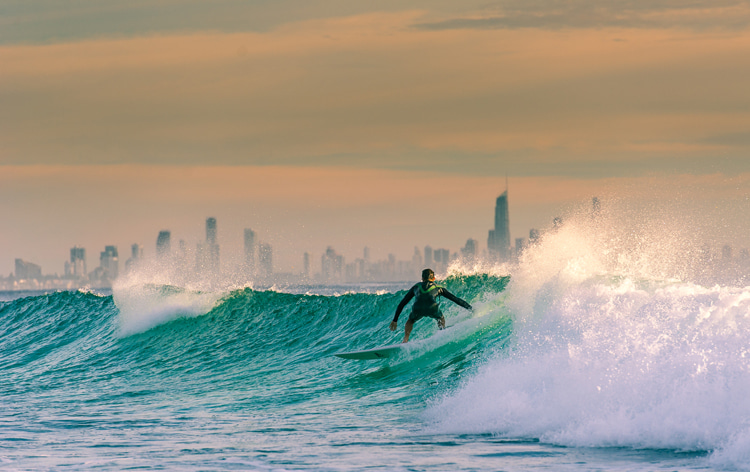
Firstly, the early morning is often characterized by haze, fog, or a marine layer from overnight moisture, creating a dark gray gloom that can distort perceptions of water conditions akin to a hangover.
You'll notice slightly choppy, bumpy wave faces morphing over the twilight sky.
You'll say it isn't good enough to paddle out, but that isn't necessarily true; it raises doubts about the quality of the upcoming session.
So, what's at stake?
The water surface conditions contribute to morning sickness due to variable winds overnight, leading to mixed-up and semi-sloppy conditions.
Additionally, tides at dawn are often either too low or too high, further affecting the wave quality.
As the morning progresses, the leftover wind bump gradually subsides, resulting in a smoother water surface.
The sunlight also plays a role, casting a clearer light on the scene, transforming the grayness into blue.
Certain regions, like Hawaii, may benefit from offshore winds as the day progresses, further cleaning up the conditions.
It's actually a very frequent phenomenon at Banzai Pipeline, forcing contest organizers to put events on hold for an hour or two.
In his explanation, Collins was clear: opt for a later start to your surfing session to avoid the initial challenges posed by morning seasickness.
Air and Land Temperatures
It's also important to underline the difference between air and land temperature in the early morning hours.
At dawn, when it's still early, and the sun hasn't warmed everything up yet, the land is cooler than the ocean.
This temperature difference causes something called a "land breeze," where gentle winds blow from the land towards the ocean.
Now, during the night, there might have been winds blowing from the ocean towards the land, creating some bumpiness on the water surface - the morning sickness.
Even when the wind stops, the effects can still be there in the morning.
As the morning goes on, the land starts to warm up, and the land breeze continues.
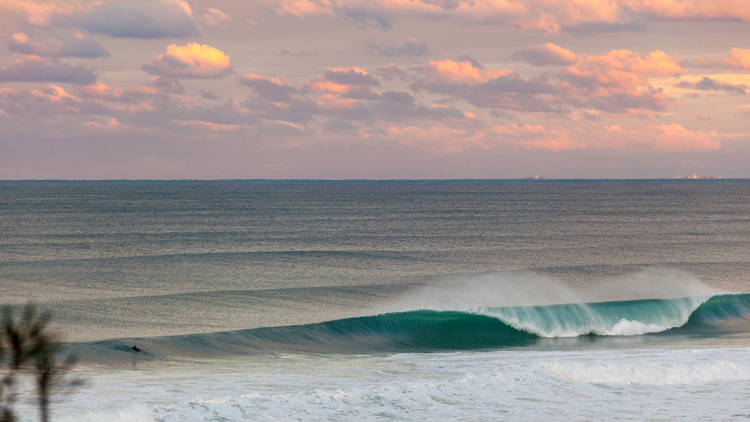
This period, before the wind changes again, is when the ocean becomes cleaner, and the waves get smoother and less rugged.
It's like a brief moment of calm just before things change.
Some places might have their local features, like mountains, that make this morning effect even stronger.
In desert areas, the offshore winds might not last long, and the sea breeze takes over pretty quickly, affecting the waves.
A good example is Namibia's Skeleton Bay.
So, with time, the ocean tends to settle into a more favorable state, offering surfers a cleaner, oily-like, and more enjoyable wave-riding experience.
In the event of an overnight offshore wind, the chop generated by a short-period wind swell should quickly disappear as opposed to 10-second-plus, long-period groundswells.
Ultimately, the balance between this unpleasant ocean condition and having an uncrowded surf spot just for yourself isn't easy to manage.
It's a fine line made of choices and compromises.
por Surf News | Headlines and Top Stories https://ift.tt/WEGUim3