Before surfing was even a popular pastime for tourists in Hawaii, Germany was already making artificial waves. Here's the story of Undosa, the first-ever wave-generating machine.
Wave pools aren't new, and surprisingly or maybe not, they preceded Duke Kahanamoku's inaugural surfing exhibition in California in 1912.
In the mid-19th century, a lakeside resort for numerous summer day trippers coming from Munich was built in Starnberg near the city center and the train station.
Around 1900, the public baths developed into a sophisticated structure for over 500 guests, with several swimming pools, and over 100 bathing cabins.
There was also a cafe inside the pool where women received swimming lessons.
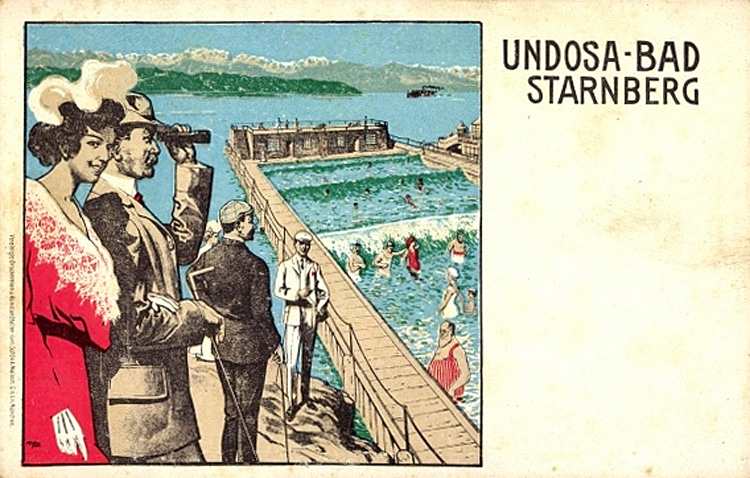
In 1905, a new facility was built and added close to the resort to offer visitors a new attraction and previously unknown experience: the Undosa.
Undosa, the Latin expression for "wave kingdom," was a water basin featuring a wave machine.
The structure built into the lake measured 60 by 15 meters. The machine hall, which had a sun terrace on its roof, was at the top of the complex.
Large pontoons raised using steam power alternately pressed on the water's surface, and the resulting water displacement created artificial waves.
An artificial beach with sand brought in from the Main River was built to reinforce the illusion of an ocean bath.
A ten-meter-high diving platform on the southern edge of the pool added a sports vibe to the wave pool.
Lake Starnberg: The First-Ever Public Wave Pool
High entrance fees guaranteed the exclusivity of the pool.
In 1908, an entry ticket to a "wave pool with laundry" cost 60 pfennigs (around four dollars/euros). And just to access the spectator stand, people had to pay 20 pfennigs (around 1.43 dollars/euros).
Children were only allowed to visit the pool in the early afternoon when only a few adults were in the pool.
Initially, there were separate bathing times for men and women.
The women's request to be allowed to watch men bathing was initially indignantly rejected, but family bathing times were soon introduced.
However, high repair costs led to the wave machine being shut down and demolished in 1921.
The lakeside restaurant located in the bathroom was expanded to include a large ballroom in 1925.
After several renovations, Undosa was closed in 1978 and demolished in 1981 due to disrepair.
Today, only the restaurant remains.
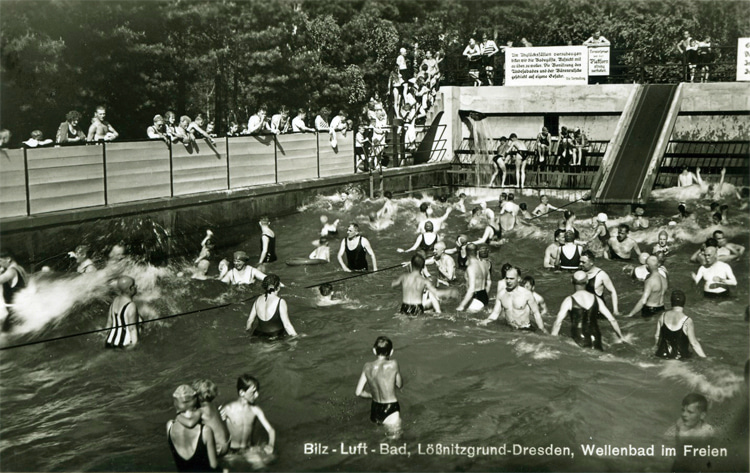
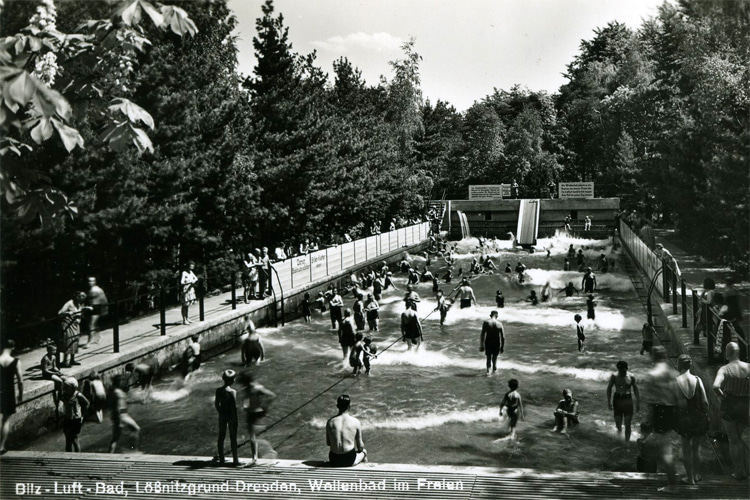
Bilzbad: Light-and-Air Baths Forever
After an early splash in Lake Starnberg, the Undosa wave machine started making waves across Germany.
In 1911, it was showcased at the International Hygiene Exhibition in Dresden and caused an impression.
When Friedrich Eduard Bilz saw the Undosa wave pool, he purchased it.
So, one year later, there was a new facility creating artificial waves.
The Bilz-Bad opened on June 25, 1912, in Radebeul.
The goal was to spread the founder's passion for naturopathy medicine. In a brochure, you could read:
"It is still far too little known that daily air baths contribute significantly to maintaining and regaining health."
"Health is literally stored in the body through 'light-and-air' baths."
"Through these baths, you practice the very best skin care and strengthen your nervous system."
"The light-air baths harden the body, make it resilient, and cheer up the mind. They, therefore, form a universal preventative against disease and a tonic and healing agent of tremendous effect."
By opening the pool, Friedrich Bilz had fulfilled a dream: to create a sizeable and diverse public health facility that everyone could afford.
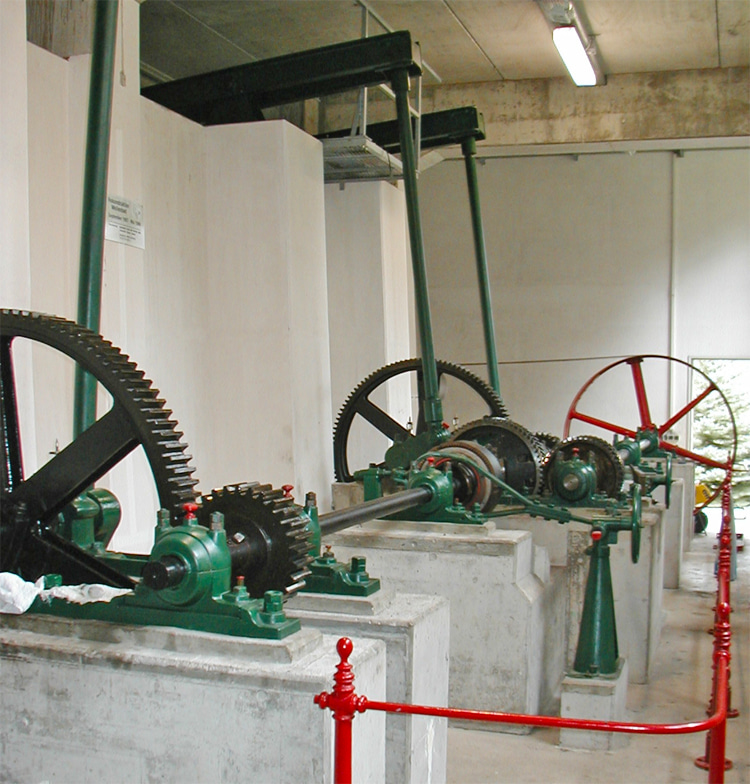
The Longlasting Undosa Wave Pool Experience
For decades, the Undosa wave machine created waves in the basin every hour, announced by the ringing of a bell.
The good news is that, unlike Starnberg's Undosa experience, nothing would change at Radebeul in the following years and decades.
Thanks to the 1998 renovation, the world's oldest operating wave pool is still creating ripples of fun and health in the Saxony town.
Despite working as a naturopath, Friedrich Bilz still found time to perfect his healing methods and write more books.
The reputation of the Bilz-Sanatorium and the "light-and-air" bath spread very quickly, and the businessman never complained about the lack of spa guests from near and far.
With his successes, hatred, resentment, and envy were inevitable.
But he did not allow himself to be deterred from his goals because they were pure and noble.
Bilz fought tirelessly for his ideas and natural medicine. On January 30, 1922, he closed his eyes forever. On his tombstone, we read: "Nature was my guiding star."
por Surf News | Headlines and Top Stories https://ift.tt/cTZuOrz