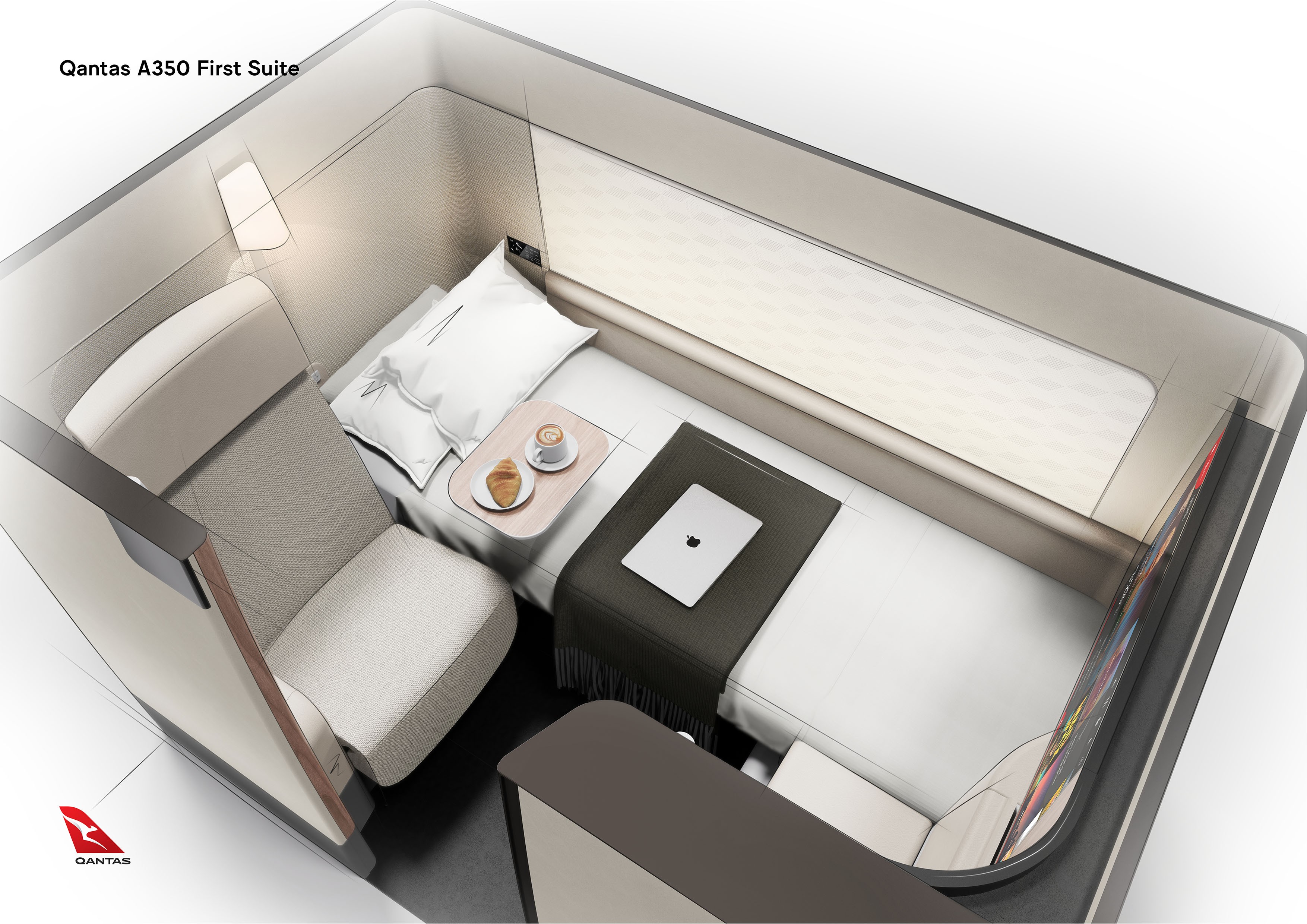
Empresa australiana Qantas fará rotas de Sydney para Londres ou Nova York com duração de 19 horas e sem escala. Previsão é que as viagens comecem em 2025. Veja como serão as suítes de luxo privativas do voo mais longo do mundo Suítes de luxo privativas e até uma área para esticar as pernas e se alongar. Essas são algumas características do avião que fará o “voo mais longo do mundo” pela companhia aérea australiana Qantas, previsto para operar em 2025. A empresa anunciou no início de maio que assinou um contrato com a Airbus para a compra de 12 aviões A350-1000. Eles farão as rotas entre Sydney e Londres e Sydney e Nova York sem escalas, em voos com duração de 19 horas. Atualmente, os trajetos são feitos em 24 horas, com paradas. Com o nome “Projeto Amanhecer”, a companhia aérea compartilhou alguns detalhes do voo em sua página oficial. A aeronave levará 238 passageiros, número de assentos menor em comparação com qualquer outro A350-1000 — que pode levar até 366 pessoas. Um vídeo divulgado pela empresa mostra como será a suíte de luxo, que faz parte da primeira classe. Nela, o passageiro terá cama e poltrona individuais, armário para bagagem, roupa de cama de luxo e tela de 32 polegadas (veja no vídeo acima). Suíte de luxo privativa em voo da Qantas Divulgação/Qantas Imagens de uma área de lazer, chamada de “zona de bem-estar”, também foram divulgadas. A Qantas afirma que ela foi projetada para que o passageiro possa se movimentar e fazer alongamento. Nela, haverá também uma estação de lanches “self-service” e telas de entretenimento. ‘Voo mais longo do mundo’ terá área para passageiro se alongar Divulgação/Qantas Área de lazer para passageiro se alongar e hidratar Divulgação/Qantas Quatro classes Os assentos serão divididos nas seguintes classes: Primeira: 6 suítes privativas com cama, poltrona e armário, além de tela de entretenimento de bordo de 32 polegadas; Business: 52 suítes com acesso direto ao corredor e que foram “projetadas para redefinir as viagens a trabalho de longa distância”, segundo a companhia; Premium Economy: 40 assentos com cerca de 1 metro de distância entre cada fileira; Economy: 140 assentos com cerca de 84 centímetros de distância entre cada fileira. A estimativa dos preços das passagens ainda não foi informada. Suíte de luxo privativa da primeira classe do voo da Qantas Divulgação/Qantas Projeto Amanhecer De acordo com o presidente do Grupo Qantas, Alan Joyce, o projeto foi desenvolvido devido ao aumento da demanda após as fronteiras da Austrália serem reabertas depois de dois anos de pandemia de Covid. A aeronave terá autonomia de 16.100 km e será alimentada por motores turbofan Rolls-Royce Trent XWB-97, que são 25% mais eficientes em termos de combustível do que as aeronaves da geração anterior. O avião terá filtros de ar com alta eficiência para reduzir emissão de CO2, enfatiza Joyce. “Todas essas aeronaves de próxima geração, por meio de suas emissões mais baixas, maior alcance, menos ruído e melhor economia, melhorarão a forma como as pessoas viajam pela Austrália e no exterior. A experiência será realmente excepcional", afirmou em nota divulgada pela companhia. Aeronaves da Qantas Airways no Aeroporto Internacional de Adelaide, na Austrália David Gray/File Photo/Reuters
Este artigo g1 > Turismo e Viagem foi publicado em https://g1.globo.com/turismo-e-viagem/noticia/2022/06/02/suites-de-luxo-e-area-de-lazer-para-alongamento-veja-como-sera-o-voo-mais-longo-do-mundo.ghtml
Via RSS publicado em https://vitorolig.tumblr.com/post/685937745725669376