Pular para o conteúdo principal

Biden apoiou programa que levará astronautas a Estação Espacial

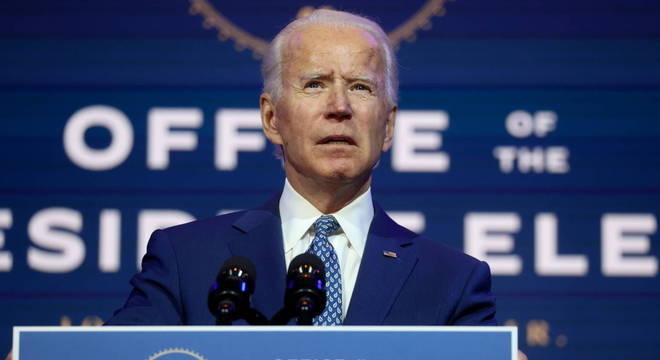
Biden ajudou a aprovar lei que apoiava o desenvolvimento do Programa de Tripulação Comercial
Biden ajudou a aprovar lei que apoiava o desenvolvimento do Programa de Tripulação Comercial Jonathan Ernst/Reuters - 9.11.2020

A SpaceX, empresa de transporte espacial do bilionário Elon Musk, levará neste sábado (14) quatro astronautas a bordo do foguete Falcon 9 à Estação Espacial Internacional (EEI), situada na órbita da Terra. Esta será a primeira missão operacional da tripulação lançada em solo americano desde a aposentadoria do programa Ônibus Espacial, em 2011.

O lançamento é fruto de um esforço contínuo para impulsionar o financiamento do Programa de Tripulação Comercial da NASA, a agência espacial norte-americana, que teve início ainda em 2011 e recebeu o apoio do então ex-vice presidente e agora presidente eleito Joe Biden.

“Joe Biden foi uma parte importante de tudo isso”, afirmou o ex-senador democrata da Flórida Bill Nelsen, em coletiva em maio deste ano.

Segundo Nelsen, Biden o ajudou a aprovar um projeto de lei de autorização no Congresso em 2010 que apoiava o desenvolvimento do Programa de Tripulação Comercial, bem como o desenvolvimento do Sistema de Lançamento Espacial da NASA e da nave espacial Orion.

As raízes do programa remontam à administração de George Bush, quando a espaçonave Orion da NASA foi originalmente vista como o próximo ônibus espacial que levaria astronautas à EEI.

Orion foi posteriormente relegado para missões no espaço profundo, incluindo viagens à lua. Em setembro de 2014, a NASA escolheu a Boeing e a SpaceX para levar astronautas para a EEI dois anos antes do presidente Donald Trump assumir o cargo.

Desde então, o desenvolvimento de ambas as espaçonaves, o Crew Dragon da SpaceX e o Starliner da Boeing, foram afetados por atrasos, forçando a agência espacial a continuar fazendo uso da espaçonave Soyuz da Rússia para transportar astronautas para a estação espacial.

Retorno do homem à Lua

Sob o comando de Trump, a NASA reforçou por diversas vezes o compromisso de promover o retorno do homem à Lua, fosse por meio da Orion ou da nave espacial da SpaceX.

Em maio, Nelson disse que sua esperança é que Biden “continue a marchar no caminho que estamos seguindo agora, voltando para a Lua e depois para Marte”.

Ainda não se sabe, no entanto, se o presidente eleito seguirá esses passos. Quatro principais “prioridades” listadas recentemente no site de transição de Biden não incluem uma diretiva espacial, levando alguns a acreditar que a agência espacial pode voltar seu foco para a mudança climática.

*Estagiária do R7 sob supervisão de Fábio Fleury


Este texto foi publicado primeiro em http://noticias.r7.com/tecnologia-e-ciencia/biden-apoiou-programa-que-levara-astronautas-a-estacao-espacial-13112020

Via RSS publicado em https://vitorolig.tumblr.com/post/634678651918614528

Postagens mais visitadas deste blog

Duke Kahanamoku reflects on surfing, Olympics, and old Hawaii in 1966 interview

Duke Kahanamoku is the most influential surfer of all time and is often hailed as the father of modern surfing. There is nearly no one questioning these titles. Recently, Public Broadcasting Service (PBS) Hawaii unveiled a never-before-seen interview with the legendary surfer and Olympic swimmer. In the 1966 episode of Pau Hana Years, a seminal Hawaii television program that aired on KHET-TV (now PBS Hawaii) for 16 years, running from 1966 until 1982, Bob Barker chats with Duke Kahanamoku, then 76. The conversation drifts from royal ancestry to Olympic lanes, from Hollywood sets to a surfboard shaped by hand, tracing the outline of a life that helped define modern surfing and Hawaii's public image in the 20th century. And if you know little about the man who dreamed of getting surfing into the Olympic Games, this is a precious piece of history. A name with history, worn casually The interview starts with Kahanamoku explaining that "Duke" is not a title but his giv...

The hydrodynamics of surfboard fins

Have you ever wondered why a surfboard fin looks like that? It is a single or a set of fixed blades or keels located under a board, near the tail, often no bigger than a hand. Yet that small surface is where much of the surfboard's behavior takes place. Speed, hold, looseness, and the feeling of control all trace back to how water moves around fins. The physics of surfboard fins falls under hydrodynamics, the study of how fluids behave in motion. So, according to science, they feature a shape designed to turn flowing water into several forces. Let's take a look at what's at stake when fins and water interact. Lift and the feeling of control One of the key variables in hydrodynamic terms involving surfboard fins is lift. When a surfer leans into a turn, the board tilts and the fins meet the water at an angle. The angle is enough to create a pressure difference between the two sides of the fin. Water speeds up on one side and slows on the other. The result is a sidewa...

How paddleboarding transforms your body and mind

Adventure is on our doorstep. With so many different bodies of water available to paddleboarders, from city canals to coastal routes, we can find adventure in places much closer to home than people might initially expect. According to the Canal and River Trust, 50 percent of people in England and Wales live within just eight kilometers of a canal or river, and eight million people live less than one kilometer away. I had lived within just a few kilometers of the Leeds and Liverpool Canal for years and never really explored it before stand-up paddleboarding (SUP) came into my life . The challenge created both a new perspective and a deeper love for where I lived and the areas which I passed through. On my coast-to-coast journey, I slept in my own bed for two nights as the route passed through my then hometown of Skipton, yet I felt I was on a grand journey of discovery. We are braver, stronger, and more resilient than we think. SUP not only helps us feel more connected to our va...