Pular para o conteúdo principal

'Lua Azul': o raro evento cósmico que poderá ser visto neste 31 de outubro (e não se repetirá até 2023)
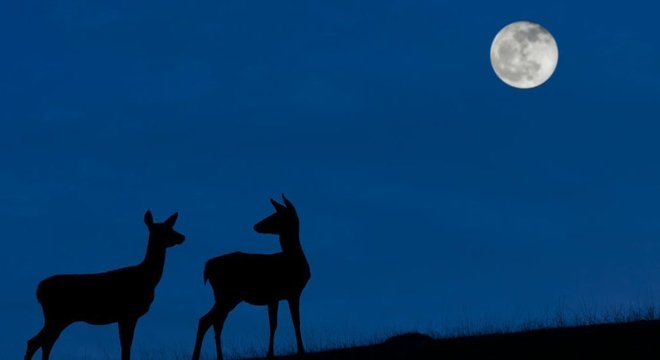
A 'Lua Azul' poderá ser vista na noite de 31 de outubro quando o céu estiver limpo
A ‘Lua Azul’ poderá ser vista na noite de 31 de outubro quando o céu estiver limpo BBC NEWS BRASIL

Ela não é realmente azul. É uma lua cheia, como qualquer outra, da cor que a maioria das luas cheias são vistas: cinza claro, branco leitoso ou prateado.

O que torna estranho esse fenômeno, que o folclore batizou de “Lua Azul”, é que ela é a segunda lua cheia em um único mês, quando o normal é termos apenas uma.

O ciclo lunar, período em que ocorrem todas as fases da Lua, se repete a cada 29,5 dias ou mais.

Para que a “Lua Azul” ocorra são necessárias duas coincidências: a primeira lua cheia precisa ocorrer no primeiro ou segundo dia do mês, e este mês precisa ter 31 dias. Assim, é provável que apareça uma segunda lua cheia.

Esse fenômeno é conhecido como “Lua Azul”.

O mês de fevereiro, que tem 28 dias, por exemplo, nunca verá uma “Lua Azul”.
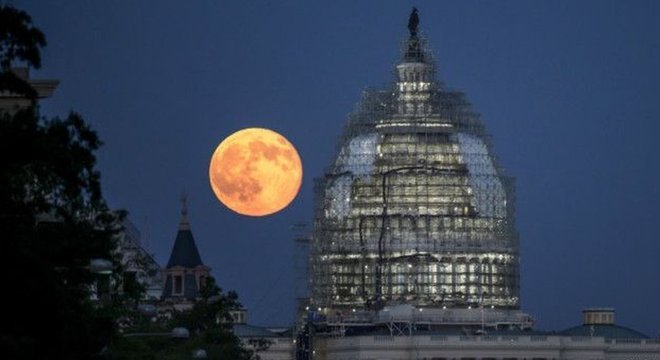
A Lua Azul apareceu dessa forma em Washington, nos Estados Unidos, em 2015
A Lua Azul apareceu dessa forma em Washington, nos Estados Unidos, em 2015 BBC NEWS BRASIL

Quando é a 'Lua Azul’ de 2020?

A Lua Azul é um fenômeno incomum que ocorre apenas a cada 2,5 anos.

A última vez que isso aconteceu foi em 31 de março de 2018.

Neste ano, ela aparecerá no céu na noite de 31 de outubro a 1 de novembro, quando muitos países celebram o Halloween. No México, o dia marca o começo do festival do Dia dos Mortos.

Já houve uma lua cheia no dia 1º de outubro e, no final do mês, poderemos ver a segunda.
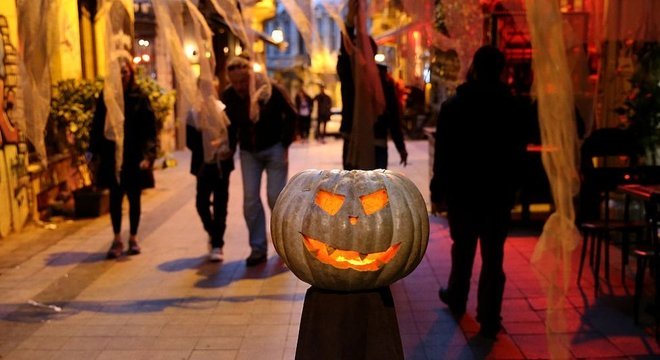
Neste ano a Lua Azul coincide com o Halloween
Neste ano a Lua Azul coincide com o Halloween BBC NEWS BRASIL

Por que Lua Azul?

Como a Nasa explica em seu site, o termo Lua Azul surgiu na década de 1940.

Na época, o Maine Farmer’s Almanac (uma publicação anual que desde 1818 traz previsões sobre eventos ligados a clima nos EUA e Canadá) oferecia uma definição da Lua Azul tão complicada que muitos astrônomos tinham dificuldade em entendê-la.

Para explicar as luas azuis em linguagem simples, a revista Sky & Telescope publicou um artigo em 1946 intitulado 'Uma vez em uma lua azul’. O autor, James Hugh Pruett (1886-1955), citou o almanaque do Maine de 1937 e disse: “A segunda (Lua Cheia) em um mês, como eu interpreto, é chamada de Lua Azul.”

E assim nasceu a moderna Lua Azul. Ela inspirou livros, filmes e músicas como Blue Moon, composta em 1934 por Richard Rogers e Lorenz Hart, gravada por inúmeros artistas como Elvis Presley, Frank Sinatra, Dean Martin, Billie Holliday e Billy Eckstine.
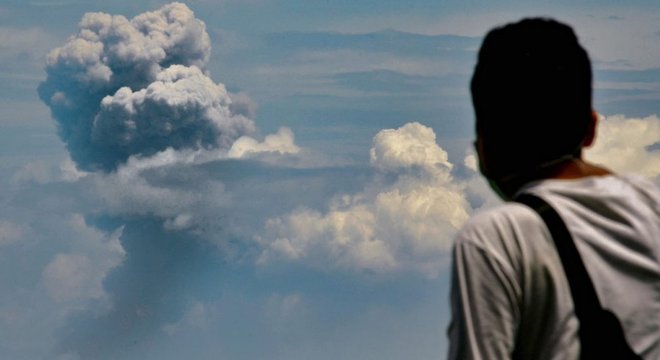
O vulcão Krakatoa, na Indonésia, expeliu cinzas novamente em 11 de abril de 2020
O vulcão Krakatoa, na Indonésia, expeliu cinzas novamente em 11 de abril de 2020 BBC NEWS BRASIL

Luas e vulcões

Embora a Lua Azul não pareça ser azul, existem luas dessa cor.

Mas elas só podem parecer azuis após uma erupção vulcânica.

Em 1883, após o terremoto do vulcão Krakatoa, na Indonésia, as pessoas diziam que em quase todas as noites era possível ver luas azuis.

Com a força da erupção, semelhante a uma bomba nuclear de 100 megatons, nuvens de cinzas subiram ao topo da atmosfera terrestre e suas partículas fizeram a lua parecer azul.

Também houve relatos de luas azuis no México em 1983, após a erupção do vulcão El Chichón, e no Estado de Washington em 1980, após a erupção do Monte Santa Helena.


Este texto foi publicado primeiro em http://noticias.r7.com/tecnologia-e-ciencia/lua-azul-o-raro-evento-cosmico-que-podera-ser-visto-neste-31-de-outubro-e-nao-se-repetira-ate-2023-28102020

Via RSS publicado em https://vitorolig.tumblr.com/post/633289433765052416

Postagens mais visitadas deste blog

Duke Kahanamoku reflects on surfing, Olympics, and old Hawaii in 1966 interview

Duke Kahanamoku is the most influential surfer of all time and is often hailed as the father of modern surfing. There is nearly no one questioning these titles. Recently, Public Broadcasting Service (PBS) Hawaii unveiled a never-before-seen interview with the legendary surfer and Olympic swimmer. In the 1966 episode of Pau Hana Years, a seminal Hawaii television program that aired on KHET-TV (now PBS Hawaii) for 16 years, running from 1966 until 1982, Bob Barker chats with Duke Kahanamoku, then 76. The conversation drifts from royal ancestry to Olympic lanes, from Hollywood sets to a surfboard shaped by hand, tracing the outline of a life that helped define modern surfing and Hawaii's public image in the 20th century. And if you know little about the man who dreamed of getting surfing into the Olympic Games, this is a precious piece of history. A name with history, worn casually The interview starts with Kahanamoku explaining that "Duke" is not a title but his giv...

The hydrodynamics of surfboard fins

Have you ever wondered why a surfboard fin looks like that? It is a single or a set of fixed blades or keels located under a board, near the tail, often no bigger than a hand. Yet that small surface is where much of the surfboard's behavior takes place. Speed, hold, looseness, and the feeling of control all trace back to how water moves around fins. The physics of surfboard fins falls under hydrodynamics, the study of how fluids behave in motion. So, according to science, they feature a shape designed to turn flowing water into several forces. Let's take a look at what's at stake when fins and water interact. Lift and the feeling of control One of the key variables in hydrodynamic terms involving surfboard fins is lift. When a surfer leans into a turn, the board tilts and the fins meet the water at an angle. The angle is enough to create a pressure difference between the two sides of the fin. Water speeds up on one side and slows on the other. The result is a sidewa...

How paddleboarding transforms your body and mind

Adventure is on our doorstep. With so many different bodies of water available to paddleboarders, from city canals to coastal routes, we can find adventure in places much closer to home than people might initially expect. According to the Canal and River Trust, 50 percent of people in England and Wales live within just eight kilometers of a canal or river, and eight million people live less than one kilometer away. I had lived within just a few kilometers of the Leeds and Liverpool Canal for years and never really explored it before stand-up paddleboarding (SUP) came into my life . The challenge created both a new perspective and a deeper love for where I lived and the areas which I passed through. On my coast-to-coast journey, I slept in my own bed for two nights as the route passed through my then hometown of Skipton, yet I felt I was on a grand journey of discovery. We are braver, stronger, and more resilient than we think. SUP not only helps us feel more connected to our va...