Pular para o conteúdo principal

Um guia definitivo de como cães e gatos enxergam o mundo

Você já se perguntou como cães e gatos enxergam o mundo? Quais cores veem, o campo de visão, essas coisas? Geralmente a primeira coisa que aprendemos é que a maioria dos animais enxerga em preto e branco, o que está muito longe da verdade. Diversos animais possuem uma visão muito apurada, mas geralmente em equilíbrio com outros órgãos de sentidos
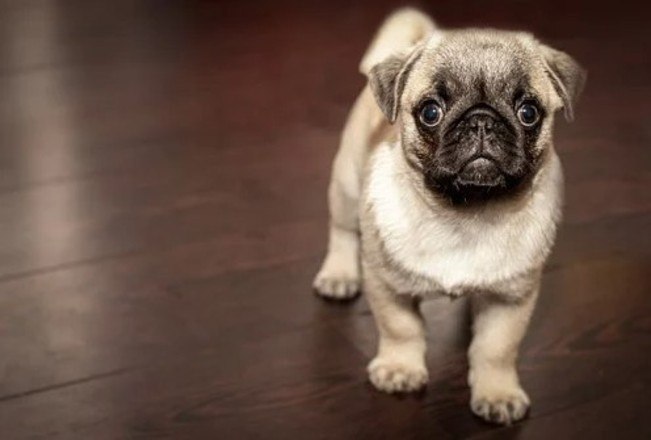
Em primeiro lugar, é preciso saber que cães e gatos são predadores, então os sentidos deles se desenvolveram para atender a necessidade de caçar outros animais

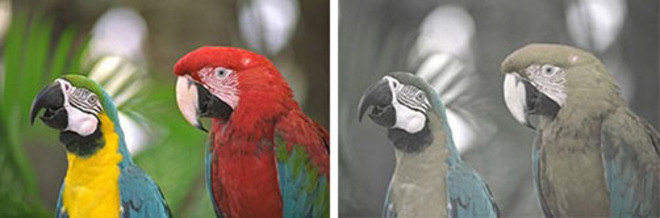
Então, eles enxergam mais ou menos assim, com relação às cores. À direita, é possível ver um cenário mais apagado, com menos destaque de cores. É assim que cães e gatos enxergam o mundo

LEIA TAMBÉM: Planeta perdeu 68% dos animais selvagens em 46 anos, diz estudo

A visão deles está mais puxada para o azul e amarelo, sem tantos tons quentes
A explicação da evolução para nossa diversidade maior de cores, envolve o fato de que também comemos frutas e ervas, e necessitamos saber quais deles estão maduros e estragados

VEJA MAIS: Gráfico mostra a popularidade dos navegadores nos últimos 25 anos

Segundo o site Success Dogs, testes comportamentais afirmam que azul, cinza e marrom são as cores primárias para cães. Eles podem distinguir azul de vermelho, mas verde e vermelho podem causar confusão
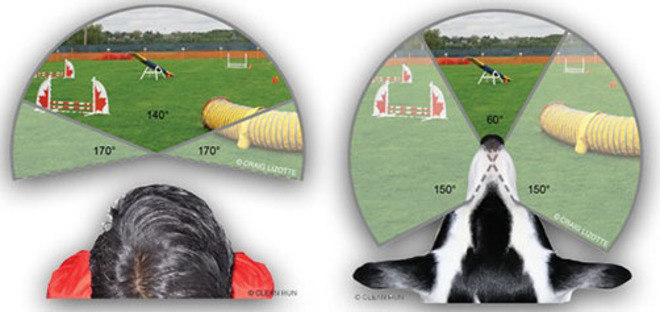
Existe também diferenças com ângulos de visão. Os cães têm menos acuidade visual (capacidade de avaliar a distância de objetos), o que lhes permite ver objetos e animais a cerca de 6 metros, sem borrões. Humanos chegam a 30 metros de acuidade visual, segundo o site Popular Science. No entanto, o ângulo de visão dos cães é mais amplo, pelos olhos estarem mais distantes um do outro

Mas cães e gatos possuem vantagens visuais. Conseguem detectar movimentos, mesmo sutis, a cerca de 800 metros. Eles também enxergam melhor no escuro e precisam de muito menos iluminação para formar uma imagem para o cérebro

VEJA ISSO: Tsar Bomba: Rússia divulga imagens do maior teste nuclear da história

Além disso, ambas as espécies possuem outros sentidos que os auxiliam numa caçada. Mesmo que o alvo suma de vista, um gato pode se guar pelos sons emitidos por eles, ou pelo cheiro. Lembre-se disso quando olhar seu cão ou gato brincando!

NÃO VÁ EMBORA: Homem mostra como cabeça de baleia é ‘mole’ e gera polêmica


Este texto foi publicado primeiro em http://noticias.r7.com/tecnologia-e-ciencia/fotos/um-guia-definitivo-de-como-caes-e-gatos-enxergam-o-mundo-14092020

Via RSS publicado em https://vitorolig.tumblr.com/post/629223906073575424

Postagens mais visitadas deste blog

Duke Kahanamoku reflects on surfing, Olympics, and old Hawaii in 1966 interview

Duke Kahanamoku is the most influential surfer of all time and is often hailed as the father of modern surfing. There is nearly no one questioning these titles. Recently, Public Broadcasting Service (PBS) Hawaii unveiled a never-before-seen interview with the legendary surfer and Olympic swimmer. In the 1966 episode of Pau Hana Years, a seminal Hawaii television program that aired on KHET-TV (now PBS Hawaii) for 16 years, running from 1966 until 1982, Bob Barker chats with Duke Kahanamoku, then 76. The conversation drifts from royal ancestry to Olympic lanes, from Hollywood sets to a surfboard shaped by hand, tracing the outline of a life that helped define modern surfing and Hawaii's public image in the 20th century. And if you know little about the man who dreamed of getting surfing into the Olympic Games, this is a precious piece of history. A name with history, worn casually The interview starts with Kahanamoku explaining that "Duke" is not a title but his giv...

The hydrodynamics of surfboard fins

Have you ever wondered why a surfboard fin looks like that? It is a single or a set of fixed blades or keels located under a board, near the tail, often no bigger than a hand. Yet that small surface is where much of the surfboard's behavior takes place. Speed, hold, looseness, and the feeling of control all trace back to how water moves around fins. The physics of surfboard fins falls under hydrodynamics, the study of how fluids behave in motion. So, according to science, they feature a shape designed to turn flowing water into several forces. Let's take a look at what's at stake when fins and water interact. Lift and the feeling of control One of the key variables in hydrodynamic terms involving surfboard fins is lift. When a surfer leans into a turn, the board tilts and the fins meet the water at an angle. The angle is enough to create a pressure difference between the two sides of the fin. Water speeds up on one side and slows on the other. The result is a sidewa...

How paddleboarding transforms your body and mind

Adventure is on our doorstep. With so many different bodies of water available to paddleboarders, from city canals to coastal routes, we can find adventure in places much closer to home than people might initially expect. According to the Canal and River Trust, 50 percent of people in England and Wales live within just eight kilometers of a canal or river, and eight million people live less than one kilometer away. I had lived within just a few kilometers of the Leeds and Liverpool Canal for years and never really explored it before stand-up paddleboarding (SUP) came into my life . The challenge created both a new perspective and a deeper love for where I lived and the areas which I passed through. On my coast-to-coast journey, I slept in my own bed for two nights as the route passed through my then hometown of Skipton, yet I felt I was on a grand journey of discovery. We are braver, stronger, and more resilient than we think. SUP not only helps us feel more connected to our va...