Pular para o conteúdo principal

Isolamento da pandemia pode ser aliviada com nano satélites

Pequenos satélites podem ajudar a levar conexão a lugares isolados
Pequenos satélites podem ajudar a levar conexão a lugares isolados Aganon77/Wikimedia Commons

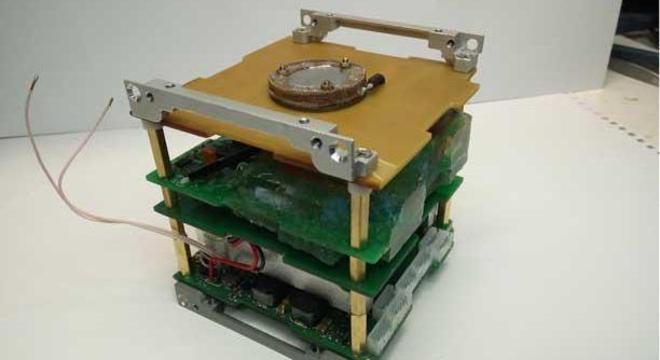
Uma iniciativa de pesquisadores brasileiros pretende levar conexão de internet para comunidades isoladas, com o uso de nano satélites.

Com essa tecnologia, áreas remotas e aldeias indígenas poderão obter contato com à internet, se beneficiando da telemedicina, diz Renato Borges, membro do  IEEE (Instituto dos Engenheiros Eletrônicos e Eletricistas) e professor do Instituto de Engenharia Elétrica da Universidade de Brasília (UnB).

Essa tecnologia seria também uma forma de obter informações importantes de locais normalmente isolados.

“Essas comunidades são mais vulneráveis à covid-19, porque na maioria dos casos não têm estrutura de saúde. E demandam logística especial para o transporte de pacientes até os hospitais nos grandes centros”, afirma Borges.

Levando em conta esse cenário, a produção, lançamento e manutenção de satélites se torna uma alternativa viável economicamente, por abranger até mesmo regiões de mata fechada como a Amazônia.

“Além de levar a Internet, esse artefato pode facilitar a implementação da Internet das Coisas, que permite a interconexão de dispositivos como celulares, aparelhos de televisão e computadores”, complementa. 

O primeiro nanosatélite brasileiro foi lançado em 2014 e, atualmente, Renato está à frente da missão espacial brasileira Alfa Crux, que pretende colocar em órbita até o final de 2021 um nanosatélite para fornecer sinais de comunicação de voz e de dados a áreas remotas do País.

O mecanismo ficará em órbita a cerca de 500 quilômetros de altitude em relação ao nível do mar e esse objetivo é resultado de uma parceria entre a UnB, a Agência Espacial Brasileira e a Fundação de Amparo à Pesquisa do Distrito Federal.

*Estagiária do R7, sob supervisão de Filipe Siqueira


Este texto foi publicado primeiro em http://noticias.r7.com/tecnologia-e-ciencia/isolamento-da-pandemia-pode-ser-aliviada-com-nano-satelites-25092020

Via RSS publicado em https://vitorolig.tumblr.com/post/630288421548638208

Postagens mais visitadas deste blog

Duke Kahanamoku reflects on surfing, Olympics, and old Hawaii in 1966 interview

Duke Kahanamoku is the most influential surfer of all time and is often hailed as the father of modern surfing. There is nearly no one questioning these titles. Recently, Public Broadcasting Service (PBS) Hawaii unveiled a never-before-seen interview with the legendary surfer and Olympic swimmer. In the 1966 episode of Pau Hana Years, a seminal Hawaii television program that aired on KHET-TV (now PBS Hawaii) for 16 years, running from 1966 until 1982, Bob Barker chats with Duke Kahanamoku, then 76. The conversation drifts from royal ancestry to Olympic lanes, from Hollywood sets to a surfboard shaped by hand, tracing the outline of a life that helped define modern surfing and Hawaii's public image in the 20th century. And if you know little about the man who dreamed of getting surfing into the Olympic Games, this is a precious piece of history. A name with history, worn casually The interview starts with Kahanamoku explaining that "Duke" is not a title but his giv...

The hydrodynamics of surfboard fins

Have you ever wondered why a surfboard fin looks like that? It is a single or a set of fixed blades or keels located under a board, near the tail, often no bigger than a hand. Yet that small surface is where much of the surfboard's behavior takes place. Speed, hold, looseness, and the feeling of control all trace back to how water moves around fins. The physics of surfboard fins falls under hydrodynamics, the study of how fluids behave in motion. So, according to science, they feature a shape designed to turn flowing water into several forces. Let's take a look at what's at stake when fins and water interact. Lift and the feeling of control One of the key variables in hydrodynamic terms involving surfboard fins is lift. When a surfer leans into a turn, the board tilts and the fins meet the water at an angle. The angle is enough to create a pressure difference between the two sides of the fin. Water speeds up on one side and slows on the other. The result is a sidewa...

How paddleboarding transforms your body and mind

Adventure is on our doorstep. With so many different bodies of water available to paddleboarders, from city canals to coastal routes, we can find adventure in places much closer to home than people might initially expect. According to the Canal and River Trust, 50 percent of people in England and Wales live within just eight kilometers of a canal or river, and eight million people live less than one kilometer away. I had lived within just a few kilometers of the Leeds and Liverpool Canal for years and never really explored it before stand-up paddleboarding (SUP) came into my life . The challenge created both a new perspective and a deeper love for where I lived and the areas which I passed through. On my coast-to-coast journey, I slept in my own bed for two nights as the route passed through my then hometown of Skipton, yet I felt I was on a grand journey of discovery. We are braver, stronger, and more resilient than we think. SUP not only helps us feel more connected to our va...