Pular para o conteúdo principal

Ministério reúne voluntários para estudo clínico contra covid-19

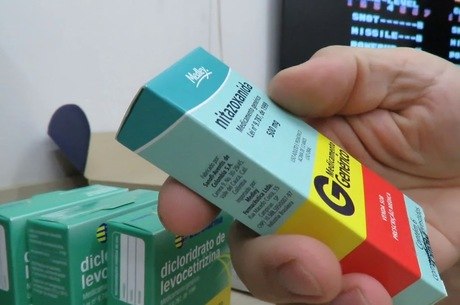
Pesquisa vai investigar eficácia da nitazoxanida
Pesquisa vai investigar eficácia da nitazoxanida Reprodução/Record TV

Equipes do Ministério da Ciência, Tecnologia e Inovações completam na próxima segunda-feira (6) uma rota de quatro municípios paulistas, com o objetivo de reunir participantes para aderir a um estudo clínico que irá investigar a eficácia da nitazoxanida no tratamento de covid-19. A ação #500VoluntáriosJÁ realizou nesta quinta-feira (2) sua segunda etapa, com passagem do ministro titular da pasta, Marcos Pontes, por Barueri.

Ao comentar o potencial do medicamento, um vermífugo prescrito para giardíase, entre outras infecções parasitárias, o ministro disse que, em análises in vitro, houve uma redução de 94% da carga viral do novo coronavírus.

Em meados de abril, a Anvisa (Agência Nacional de Vigilância Sanitária) baixou a RDC (Resolução da Diretoria Colegiada) 372/2020, proibindo farmácias de vender remédios à base de nitazoxanida sem receita especial em duas vias. “Não tomem remédio por conta própria, isso é importante”, alertou Marcos Pontes.

Em sua fala, o ministro também afirmou que “a má notícia é que essa não será a última pandemia” que a humanidade irá enfrentar e que, por essa razão, o governo brasileiro precisa se preparar para futuras adversidades. Ele destacou o valor da ciência para se fazer frente ao cenário que se instalou e a importância de se alocar recursos públicos para a área, o que, pontuou, “não se faz de um dia para o outro”. “A única maneira de vencer esse problema é a ciência”, sublinhou.

A ação foi iniciada nesta quarta-feira (1º), no Centro de Especialidades Odontológicas, Guarulhos, e segue amanhã (3) para Sorocaba. A mobilização termina em Bauru, na segunda-feira. As equipes receberão os voluntários na Santa Casa de Misericórdia de Sorocaba e no Núcleo de Saúde Geisel, a partir de 10h.

Qualquer pessoa com mais de 18 anos de idade e que apresente sintomas de síndrome gripal pode se candidatar como voluntária ao experimento. Após serem submetidos a um teste RT-PCR, para confirmar o contágio de covid-19, os participantes do experimento irão ser acompanhados por oito dias pelas equipes do MCTI. Conforme a Agência Brasil apurou, consta da bula da que o medicamento é contraindicado em alguns casos, como para pessoas com doenças hepáticas (no fígado) ou doença renal.

Em nota, o ministério informou que foram identificados cinco remédios com potencial para combater a replicação do novo coronavírus. Chegou-se a essa lista após varredura em um sistema com 2 mil fármacos, feita com inteligência artificial, pelo Centro Nacional de Pesquisa em Energia e Materiais (CNPEM).

Em um documento divulgado ao final de abril, a Organização Mundial da Saúde (OMS) cita a nitazoxanida entre outros medicamentos que estão sendo estudados como possibilidade de enfrentamento à covid-19. Os testes da substância também foram objeto de questionamento ao ministro interino da Saúde, Eduardo Pazuello, no dia 23 de junho.

Em audiência realizada por iniciativa da comissão do Congresso Nacional as ações de combete à crise sanitária, ele respondeu que, de fato, é necessário se obter evidência científica quanto à validade do medicamento no combate à covid-19.


Este texto foi publicado primeiro em http://noticias.r7.com/tecnologia-e-ciencia/ministerio-reune-voluntarios-para-estudo-clinico-contra-covid-19-02072020

Via RSS publicado em https://vitorolig.tumblr.com/post/622632987940569088

Postagens mais visitadas deste blog

Duke Kahanamoku reflects on surfing, Olympics, and old Hawaii in 1966 interview

Duke Kahanamoku is the most influential surfer of all time and is often hailed as the father of modern surfing. There is nearly no one questioning these titles. Recently, Public Broadcasting Service (PBS) Hawaii unveiled a never-before-seen interview with the legendary surfer and Olympic swimmer. In the 1966 episode of Pau Hana Years, a seminal Hawaii television program that aired on KHET-TV (now PBS Hawaii) for 16 years, running from 1966 until 1982, Bob Barker chats with Duke Kahanamoku, then 76. The conversation drifts from royal ancestry to Olympic lanes, from Hollywood sets to a surfboard shaped by hand, tracing the outline of a life that helped define modern surfing and Hawaii's public image in the 20th century. And if you know little about the man who dreamed of getting surfing into the Olympic Games, this is a precious piece of history. A name with history, worn casually The interview starts with Kahanamoku explaining that "Duke" is not a title but his giv...

The hydrodynamics of surfboard fins

Have you ever wondered why a surfboard fin looks like that? It is a single or a set of fixed blades or keels located under a board, near the tail, often no bigger than a hand. Yet that small surface is where much of the surfboard's behavior takes place. Speed, hold, looseness, and the feeling of control all trace back to how water moves around fins. The physics of surfboard fins falls under hydrodynamics, the study of how fluids behave in motion. So, according to science, they feature a shape designed to turn flowing water into several forces. Let's take a look at what's at stake when fins and water interact. Lift and the feeling of control One of the key variables in hydrodynamic terms involving surfboard fins is lift. When a surfer leans into a turn, the board tilts and the fins meet the water at an angle. The angle is enough to create a pressure difference between the two sides of the fin. Water speeds up on one side and slows on the other. The result is a sidewa...

How paddleboarding transforms your body and mind

Adventure is on our doorstep. With so many different bodies of water available to paddleboarders, from city canals to coastal routes, we can find adventure in places much closer to home than people might initially expect. According to the Canal and River Trust, 50 percent of people in England and Wales live within just eight kilometers of a canal or river, and eight million people live less than one kilometer away. I had lived within just a few kilometers of the Leeds and Liverpool Canal for years and never really explored it before stand-up paddleboarding (SUP) came into my life . The challenge created both a new perspective and a deeper love for where I lived and the areas which I passed through. On my coast-to-coast journey, I slept in my own bed for two nights as the route passed through my then hometown of Skipton, yet I felt I was on a grand journey of discovery. We are braver, stronger, and more resilient than we think. SUP not only helps us feel more connected to our va...