Pular para o conteúdo principal

Pesquisa identifica anticorpo que 'bloqueia' novo coronavirus

Brasil tem 7.288 mortes por covid-19, 105.222 casos e 45.815 curados
Brasil tem 7.288 mortes por covid-19, 105.222 casos e 45.815 curados Thomas Peter/Reuters - 30.03.2020

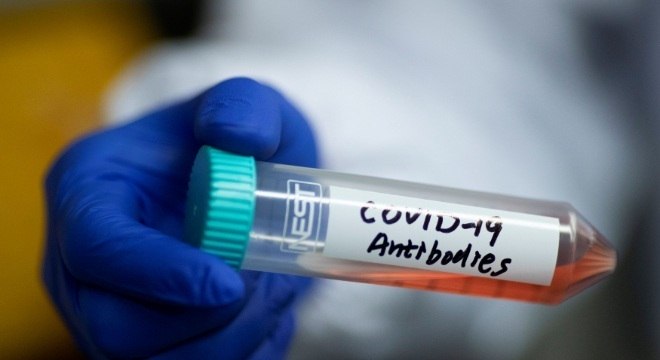
Um grupo de cientistas conseguiu reproduzir, em laboratório, um anticorpo capaz de “inibir potentemente” a infecção de células pelo agente Sars-Cov-2 — vírus responsável por causar a doença covid-19.

O estudo, que ainda é preliminar e não foi testado em seres humanos, foi publicado nesta segunda-feira (4) na revista científica Nature Communications.

De acordo com o texto, que é assinado por Berend-Jan Bosch e pesquisadores da Universidade de Utrecht, nos Países Baixos, o anticorpo pode ajudar a prevenir ou tratar a covid-19 (incluindo outras doenças relacionadas).

“Anticorpos monoclonais direcionados a locais vulneráveis nas proteínas da superfície viral são cada vez mais reconhecidos como uma classe promissora de medicamentos contra doenças infecciosas e têm demonstrado eficácia terapêutica para vários vírus”, diz um dos trechos do estudo.

O 47D11, nome científico da molécula, teria neutralizado o novo coronavírus. Entretanto, segundo os pesquisadores, o processo de ação ainda é “desconhecido” e, por isso, existe a necessidade de novos estudos in vitro.


Pesquisa em São Paulo
Anticoagulante foi utilizado em pesquisa na cidade de São Paulo
Anticoagulante foi utilizado em pesquisa na cidade de São Paulo Pixabay


Um estudo preliminar com o anticoagulante heparina em pacientes graves com a covid-19, no Hospital Sírio-Libanês, em São Paulo, mostrou que a substância contribuiu com a melhora nos níveis de oxigenação do sangue e no funcionamento dos pulmões, diminuindo assim o tempo de permanência na UTI (Unidade de Tratamento Intensivo).

De acordo com o artigo publicado pelo grupo de pesquisadores, 27 pessoas foram submetidas ao tratamento experimental, com idade média de 56 anos e portadores de doenças pré-existentes como diabetes, problemas cardíacos e obesidade.

A pesquisa identificou que o medicamento, que vem sendo utilizado na prevenção e tratamento de quadros de trombose, foi fundamental no processo de desobstrução dos vasos sanguíneos do sistema respiratório, o que representou uma queda no período em que esses indivíduos precisaram do auxílio de respiradores mecânicos.


Este texto foi publicado primeiro em http://noticias.r7.com/tecnologia-e-ciencia/pesquisa-identifica-anticorpo-que-bloqueia-novo-coronavirus-04052020

Via RSS publicado em https://vitorolig.tumblr.com/post/617283857067229184

Postagens mais visitadas deste blog

Duke Kahanamoku reflects on surfing, Olympics, and old Hawaii in 1966 interview

Duke Kahanamoku is the most influential surfer of all time and is often hailed as the father of modern surfing. There is nearly no one questioning these titles. Recently, Public Broadcasting Service (PBS) Hawaii unveiled a never-before-seen interview with the legendary surfer and Olympic swimmer. In the 1966 episode of Pau Hana Years, a seminal Hawaii television program that aired on KHET-TV (now PBS Hawaii) for 16 years, running from 1966 until 1982, Bob Barker chats with Duke Kahanamoku, then 76. The conversation drifts from royal ancestry to Olympic lanes, from Hollywood sets to a surfboard shaped by hand, tracing the outline of a life that helped define modern surfing and Hawaii's public image in the 20th century. And if you know little about the man who dreamed of getting surfing into the Olympic Games, this is a precious piece of history. A name with history, worn casually The interview starts with Kahanamoku explaining that "Duke" is not a title but his giv...

The hydrodynamics of surfboard fins

Have you ever wondered why a surfboard fin looks like that? It is a single or a set of fixed blades or keels located under a board, near the tail, often no bigger than a hand. Yet that small surface is where much of the surfboard's behavior takes place. Speed, hold, looseness, and the feeling of control all trace back to how water moves around fins. The physics of surfboard fins falls under hydrodynamics, the study of how fluids behave in motion. So, according to science, they feature a shape designed to turn flowing water into several forces. Let's take a look at what's at stake when fins and water interact. Lift and the feeling of control One of the key variables in hydrodynamic terms involving surfboard fins is lift. When a surfer leans into a turn, the board tilts and the fins meet the water at an angle. The angle is enough to create a pressure difference between the two sides of the fin. Water speeds up on one side and slows on the other. The result is a sidewa...

How paddleboarding transforms your body and mind

Adventure is on our doorstep. With so many different bodies of water available to paddleboarders, from city canals to coastal routes, we can find adventure in places much closer to home than people might initially expect. According to the Canal and River Trust, 50 percent of people in England and Wales live within just eight kilometers of a canal or river, and eight million people live less than one kilometer away. I had lived within just a few kilometers of the Leeds and Liverpool Canal for years and never really explored it before stand-up paddleboarding (SUP) came into my life . The challenge created both a new perspective and a deeper love for where I lived and the areas which I passed through. On my coast-to-coast journey, I slept in my own bed for two nights as the route passed through my then hometown of Skipton, yet I felt I was on a grand journey of discovery. We are braver, stronger, and more resilient than we think. SUP not only helps us feel more connected to our va...