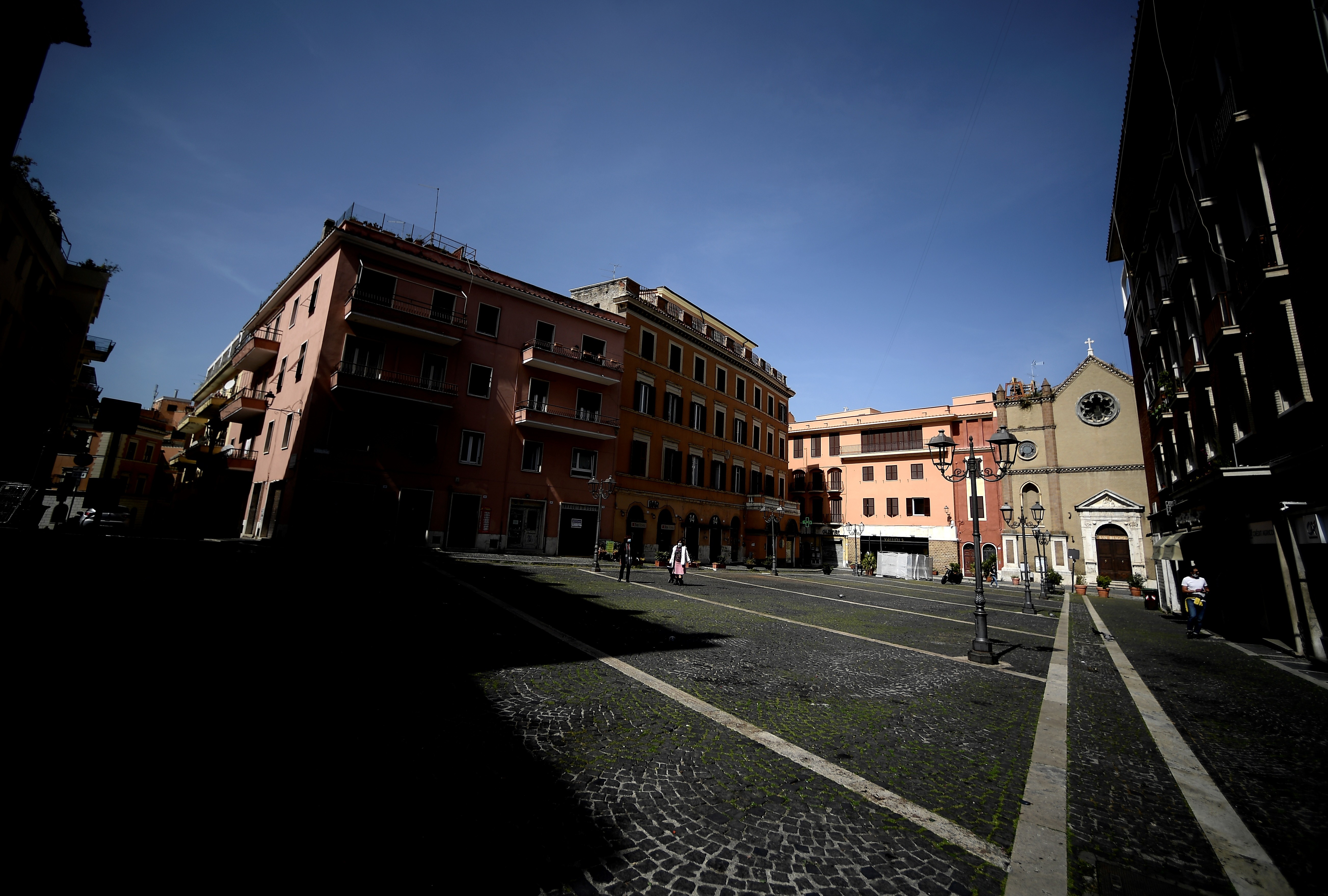
Cidades italianas vivem do turismo, setor em crise por causa da pandemia de Covid-19. Tivoli, na Itália, está vazia por causa da pandemia de Covid-19 Filippo Monteforte/AFP Sem visitantes devido ao novo coronavírus, várias cidades da Itália que vivem do turismo estão preocupadas.
Entre elas, está Tivoli, perto de Roma, que abriga uma joia de arquitetura como a Villa d'Este, famosa por seus jardins e suas mais de cem fontes. “Em Tivoli, o impacto das medidas foi negativo, era óbvio, seus monumentos (Villa d'Este do século 16 e Villa Adriana, a residência do imperador romano Adriano que reinou de 117 a 138 DC) foram fechados por mais de um mês ”, lamenta o prefeito Giuseppe Proietti, em entrevista à agência France Presse.
Tivoli, na Itália, vazia por causa da pandemia de novo coronavírus Filippo Monteforte/AFP O fechamento das duas vilas — de períodos históricos tão diferentes, mas que resumem a rica história da Itália — teve um impacto no tecido econômico da pequena cidade. “Os restaurantes e lojas do centro histórico, com vista para as pequenas praças com seus terraços, estão todos fechados”, explica. O mesmo se aplica ao setor hoteleiro, reconhece o presidente da Tivoli Accommodation Structures Association, Pietro Conversi. VENEZA: Cidade começa a retomar algumas atividades após quarentena “Dos 19 hotéis existentes, apenas dois estão abertos, os outros estão fechados, mas não por lei, simplesmente porque não há pessoas, não há demanda.
As pequenas estruturas estão todas vazias”, reitera. “Dado o contexto, desligamos a água e o gás das casas para reduzir custos. Estamos tentando ver como vamos durar até outubro”, diz Pietro Conversi. “O objetivo é obter algum auxílio estatal, mas no momento só recebemos os formulários para pagar impostos e não sabemos se teremos dinheiro para isso”, diz, aterrorizado. ‘Um ano terrível’ Villa D'Este, em Tivoli, não recebe turistas por causa do novo coronavírus Filippo Monteforte/S fornasier/AFP A espetacular Villa d'Este registra sérias perdas.
O local é patrimônio da Humanidade desde 2002 e até recentemente era considerado coração pulsante da pequena cidade, graças aos 50 mil visitantes que recebe por mês durante a alta temporada. “A perda mais significativa é dos visitantes”, confessa a diretora Andrea Bruciati, que decidiu aproveitar o fechamento para realizar uma manutenção extraordinária.
A bordo de um carrinho de golfe, a diretora percorre os esplêndidos jardins renascentistas em terraços com fontes, cachoeiras, esculturas e elementos aquáticos. “Não há dinheiro entrando agora. 2020 será um ano terrível”, resume. “Os custos de manutenção desse tipo de monumento são muito altos, abertos ou fechados”, diz Bruciati, responsável por uma das residências históricas mais espetaculares da península, construída a pedido do cardeal Ippolito d'Este ( 1509-1572), filho de Alfonso I d'Este e Lucrecia Borgia e neto do papa Alexandre VI. “Aproveitamos para fazer a manutenção da complexa rede de fontes e jardins”, se consola. “A vila estará linda para futuros visitantes”, promete. Initial plugin text
Este artigo G1 > Turismo e Viagem foi publicado em https://g1.globo.com/turismo-e-viagem/noticia/2020/04/20/sem-visitantes-italia-teme-forte-impacto-financeiro-em-destinos-turisticos.ghtml
Fornecido via RSS publicado em https://vitorolig.tumblr.com/post/615962966030958592