Pular para o conteúdo principal

Cientistas buscam cura da covid-19 com terapia usada contra câncer

Cientistas propõem combater covid -19 com terapia usada contra câncer
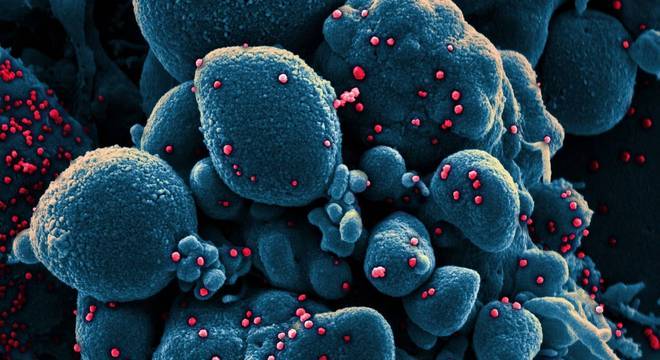
Cientistas propõem combater covid -19 com terapia usada contra câncer NIAID
Cientistas da Duke-NUS Medical School (Duke-NUS), faculdade de medicina de Cingapura, exploram a possibilidade de usar células imunes do próprio organismo para combater doenças infecciosas como a covid-19. Essa técnica, chamada de imunoterapia, já é usada no tratamento de diferentes tipos de câncer e de outros doenças infecciosas, como a hepatite B.
As informações foram publicadas na revista acadêmica Journal of Experimental Medicine nesta terça-feira (21).
A terapia envolve a extração de células imunes - chamadas linfócitos T - da corrente sanguínea de um paciente e o mecanismo de ação de um dos dois tipos de receptores para eles: receptores quiméricos de antígeno (CAR) ou receptores de células T (TCR).
Esses receptores permitem que os linfócitos T manipulados por cientistas reconheçam células cancerígenas ou infectadas por vírus. Os TCRs são naturalmente encontrados nas superfícies dos linfócitos T, enquanto os CARs são receptores artificiais de células T produzidos em laboratório.
Leia também: Estudo vê ‘espinhos’ no coronavírus e pode ajudar a barrar contágio
“Esta terapia é classicamente usada no tratamento do câncer, onde os linfócitos dos pacientes são redirecionados para encontrar e matar as células cancerígenas. No entanto, seu potencial contra doenças infecciosas e vírus específicos não foi explorado”, afirma Anthony Tanoto Tan, pesquisador sênior da Duke- Programa de Doenças Infecciosas Emergentes (EID) da NUS.
“Algumas infecções, como [as causadas pelos vírus] HIV e HBV [da hepatite B],  também podem ser um alvo perfeito para essa terapia, especialmente se os linfócitos forem projetados de maneira a ficarem ativos por um período limitado de tempo, pois isso diminui os possíveis efeitos colaterais”, acrescenta.
Leia também: Cura do câncer: as terapias que renovam a esperança
Esse tipo de imunoterapia requer pessoal e equipamento especializados e precisa ser administrado indefinidamente. Isso o torna inviável em termos de despesas para o tratamento da maioria dos tipos de infecções virais.
No entanto, no caso de infecções por HBV, por exemplo, os tratamentos antivirais atuais apenas suprimem a replicação viral e curam menos de 5% dos pacientes. Tratar essas pessoas com uma combinação de anti-virais e células T CAR / TCR pode ser uma opção viável.
Leia também: Entenda como o corpo se recupera do novo coronavírus sem remédios
“Demonstramos que as células T podem ser redirecionadas para atingir o coronavírus responsável pela SARS. Nossa equipe agora começou a explorar o potencial da imunoterapia com células T CAR / TCR para controlar o vírus causador da covid-19,  o SARS-CoV-2, e proteger pacientes que tenham sintomas ”, disse o professor Antonio Bertoletti, do programa EID da Duke-NUS.


Este texto foi publicado primeiro em R7

Via RSS publicado em https://vitorolig.tumblr.com/post/616036144733405184

Postagens mais visitadas deste blog

Duke Kahanamoku reflects on surfing, Olympics, and old Hawaii in 1966 interview

Duke Kahanamoku is the most influential surfer of all time and is often hailed as the father of modern surfing. There is nearly no one questioning these titles. Recently, Public Broadcasting Service (PBS) Hawaii unveiled a never-before-seen interview with the legendary surfer and Olympic swimmer. In the 1966 episode of Pau Hana Years, a seminal Hawaii television program that aired on KHET-TV (now PBS Hawaii) for 16 years, running from 1966 until 1982, Bob Barker chats with Duke Kahanamoku, then 76. The conversation drifts from royal ancestry to Olympic lanes, from Hollywood sets to a surfboard shaped by hand, tracing the outline of a life that helped define modern surfing and Hawaii's public image in the 20th century. And if you know little about the man who dreamed of getting surfing into the Olympic Games, this is a precious piece of history. A name with history, worn casually The interview starts with Kahanamoku explaining that "Duke" is not a title but his giv...

The hydrodynamics of surfboard fins

Have you ever wondered why a surfboard fin looks like that? It is a single or a set of fixed blades or keels located under a board, near the tail, often no bigger than a hand. Yet that small surface is where much of the surfboard's behavior takes place. Speed, hold, looseness, and the feeling of control all trace back to how water moves around fins. The physics of surfboard fins falls under hydrodynamics, the study of how fluids behave in motion. So, according to science, they feature a shape designed to turn flowing water into several forces. Let's take a look at what's at stake when fins and water interact. Lift and the feeling of control One of the key variables in hydrodynamic terms involving surfboard fins is lift. When a surfer leans into a turn, the board tilts and the fins meet the water at an angle. The angle is enough to create a pressure difference between the two sides of the fin. Water speeds up on one side and slows on the other. The result is a sidewa...

How paddleboarding transforms your body and mind

Adventure is on our doorstep. With so many different bodies of water available to paddleboarders, from city canals to coastal routes, we can find adventure in places much closer to home than people might initially expect. According to the Canal and River Trust, 50 percent of people in England and Wales live within just eight kilometers of a canal or river, and eight million people live less than one kilometer away. I had lived within just a few kilometers of the Leeds and Liverpool Canal for years and never really explored it before stand-up paddleboarding (SUP) came into my life . The challenge created both a new perspective and a deeper love for where I lived and the areas which I passed through. On my coast-to-coast journey, I slept in my own bed for two nights as the route passed through my then hometown of Skipton, yet I felt I was on a grand journey of discovery. We are braver, stronger, and more resilient than we think. SUP not only helps us feel more connected to our va...